Eco-points and compensation areas
District of Neckar-Odenwald-Kreis
Eco-points immediately available from officially recognised eco-accounts. greeNature is your full-service partner for compensation under the Eco-Account Ordinance (ÖKVO) in the Neckar-Odenwald district, from the sandstone Odenwald across the Neckar valley to the Bauland.
The District of Neckar-Odenwald-Kreis at a glance
The Neckar-Odenwald district lies in the north of Baden-Württemberg, in the far north-east of the Karlsruhe administrative region, and borders the federal states of Hesse and Bavaria. Around 144,000 people live across some 1,126 square kilometres in 27 towns and municipalities. The district seat is the major district town of Mosbach. Other towns include Buchen im Odenwald, Walldürn, Osterburken, Adelsheim and Ravenstein.
The district is divided into three landscape areas. The west and north belong to the Odenwald, mostly as the extensive sandstone Odenwald with woodland, stream valleys and ridges (BfN natural region D55, Odenwald, Spessart und Südrhön). In the south-west, the deeply incised Neckar valley, with steep slopes and castles, cuts through the area. To the south-east lies the open, arable Bauland on shell limestone, which belongs naturally to the Neckar- und Tauber-Gäuplatten (D57).
Large parts of the district lie within the Neckartal-Odenwald Nature Park, which brings together numerous landscape and nature reserves as well as Natura 2000 sites. Significant sites include the Neckartal und Wald Obrigheim (6916-342) FFH site, which extends across several sections through the Neckar-Odenwald and Rhein-Neckar districts. Near-natural beech and mixed woodland, the dry slopes of the Neckar valley and structurally rich stream floodplains shape the region's value for species and habitat conservation.
The legal basis for all compensation is §§ 13 to 15 BNatSchG. In Baden-Württemberg, the assessment is set out in more detail by the Eco-Account Ordinance (ÖKVO), which assesses impact and compensation in eco-points. In the district, the compensation requirement arises mainly from wind energy expansion on the Odenwald heights, transport and development projects, and the extraction of sandstone and shell limestone. greeNature determines the requirement and provides matching eco-points.
🗺️ Associated natural regions
Go to natural region D57 ›
Go to natural region D55 ›
📍 Selected municipalities
🌿 Ecological features
- Three-part landscape of sandstone Odenwald, Neckar valley and Bauland on shell limestone
- Large parts of the district lie within the Neckartal-Odenwald Nature Park, with numerous protected areas
- Neckartal und Wald Obrigheim FFH site (6916-342), with several sections within the district
- Densely wooded Odenwald as habitat for wildcat, bats and hazel dormouse
- Open arable landscape of the Bauland, significant for farmland birds such as the skylark
- Border location with Hesse and Bavaria in the north-east of the Karlsruhe administrative region
- Wind energy expansion on the Odenwald heights, including in the Walldürn area
✅ greeNature on the ground
greeNature develops and manages compensation and eco-account sites that suit the character of the natural regions in the Neckar-Odenwald district, such as near-natural forest conversion in the sandstone Odenwald, the restoration of the Neckar and its tributaries, and traditional orchards and extensively managed grassland in the Bauland and the Neckar valley. We secure suitable land, plan the enhancement under the Eco-Account Ordinance (ÖKVO), implement the measures, and take on long-term management, documentation and reporting to the lower nature conservation authority (Untere Naturschutzbehörde) at the Neckar-Odenwald District Office. The ÖKVO assesses the enhancement in eco-points and takes account of the spatial relationship to the impact, which is why we make sure that compensation takes effect as close as possible to the affected area. Where species protection is required under § 44 BNatSchG, we design advance CEF measures that maintain ecological function for the affected species without interruption.
Typical measures in the district of Neckar-Odenwald-Kreis
Forest conversion in the Odenwald
Near-natural conversion of coniferous plantations into structurally diverse deciduous and mixed woodland in the sandstone Odenwald. Retaining old growth and deadwood, cavity trees and graduated woodland edges strengthens the habitat network and can be credited as eco-points under the ÖKVO.
Watercourse restoration
Removal of bank engineering, creation of riparian buffer strips and near-natural redesign on the Neckar, Elz, Itter and Schefflenz. Near-natural stream courses and floodplain woodland edges improve habitats for kingfisher and fish and generate compensation value.
Traditional orchards and dry-stone walls
New planting and management of standard-tree orchards, and repair of dry-stone walls on the slopes of the Neckar valley and in the Bauland. Combined with extensive grassland use, this creates habitats for cavity-nesting birds, reptiles and wild bees.
Farmland bird protection in the Bauland
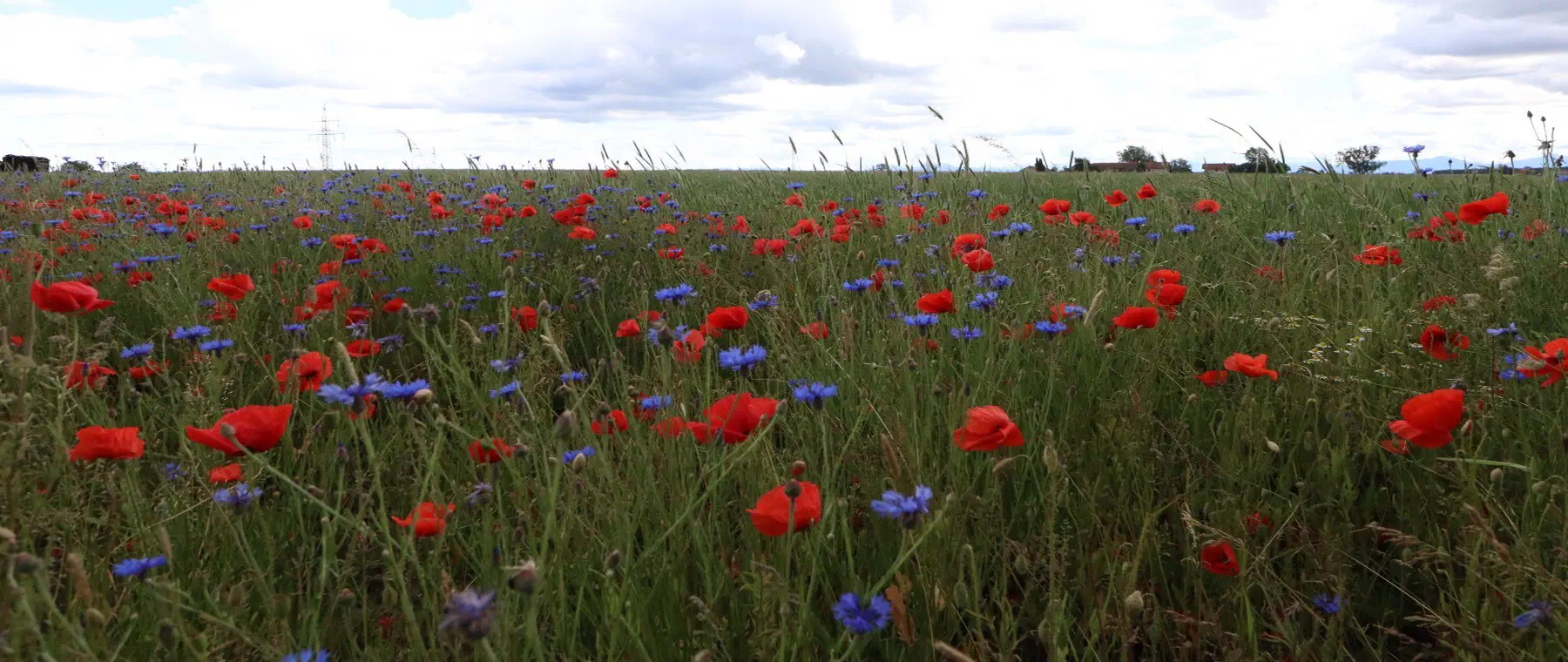
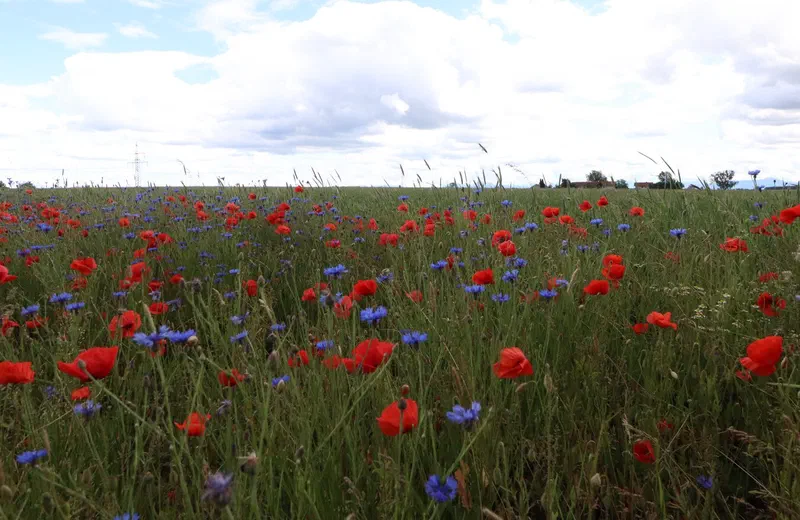
Skylark plots, flower strips and extensively managed field margins in the open arable landscape of the Bauland. These production-integrated measures enhance the farmland habitat for skylark and grey partridge.
Reptile and amphibian CEF
Creation of stone ridges, stone piles and sun-exposed margins for the sand lizard, as well as sun-exposed small water bodies in quarries and along railway embankments. As advance CEF measures, these maintain ecological function under § 44 BNatSchG.
Bat and cavity-tree protection
Securing cavity trees, retaining old-growth stands and enhancing roosts in buildings, cellars and adits. Connecting woody structures and structurally rich woodland edges improve the foraging habitats of the bat species widespread in the Odenwald.
Protected species in the Odenwald, Bauland and Neckar valley
Wildcat in the Odenwald
The extensive, low-disturbance woodlands of the Odenwald are among the habitats of the European wildcat. This strictly protected species benefits from near-natural forest conversion, old growth and deadwood, and continuous woodland and hedgerow corridors linking separate habitats.
About this species ›Bats in woodland and settlements
The beech and mixed woodlands of the Odenwald provide roosts and foraging habitat for forest-dwelling bats, while buildings, cellars and adits in the Neckar valley provide further roosts. Retaining cavity trees and securing roosts are typical measures in the district.
About this species ›Hazel dormouse
The hazel dormouse inhabits structurally rich woodland edges, scrub and hedgerows of the Odenwald. As a strictly protected species under § 44 BNatSchG, impacts frequently require the retention and creation of connected woody structures as well as advance CEF measures.
About this species ›Sand lizard
The sand lizard inhabits dry slopes in the Neckar valley, railway embankments, embankments and quarries. As a strictly protected species, impacts often require CEF measures such as stone ridges, stone piles and sun-exposed margins, which must be effective before construction begins.
About this species ›Amphibians in quarries
Small water bodies in active and disused quarries provide suitable spawning waters for amphibians such as the yellow-bellied toad. Creating new sun-exposed, fish-free ponds and pools secures breeding sites as a CEF measure and strengthens the habitat network.
About this species ›Skylark in the Bauland
The skylark is a characteristic bird of the open arable landscape of the Bauland. Its population suffers from intensive land use, which is why skylark plots, flower strips and extensively managed field margins are effective enhancements in the farmland.
About this species ›Which projects trigger a compensation obligation?
Wind energy on the Odenwald heights
The expansion of wind energy on the wooded ridges of the Odenwald, including in the Walldürn area, generates a compensation requirement. Sites in woodland regularly lead to species protection requirements, for example for bats and wind-turbine-sensitive bird species.
Transport infrastructure
Maintaining and expanding federal and state roads and railway lines in the Neckar valley and the Bauland causes impacts on nature and landscape. Routes, bridges and rail infrastructure frequently lead to compensation requirements and species protection conditions.
Raw material extraction
Sandstone extraction in the Odenwald and shell-limestone extraction in the Bauland are subject to nature conservation conditions. Extraction and restoration also offer opportunities for pioneer water bodies, dry habitats and the development of amphibian and reptile habitats as compensation.
Settlement and commerce
The designation of residential and commercial land in Mosbach, Buchen, Walldürn and the surrounding municipalities requires nature conservation compensation under the ÖKVO. Landowners and farmers can provide land for this purpose as compensation areas.
From enquiry to monitoring
Contact and enquiry
Tell us your compensation requirement and the natural region. We check availability.
Offer and advice
A transparent offer covering measure types, scope and availability.
Coordination with authorities
Full coordination with the lower nature conservation authority. We handle everything.
Long-term monitoring
Permanent securing of the land, management and documentation across the contract term.
Eco-points in adjoining districts
All about eco-points
in the district of Neckar-Odenwald-Kreis
Request eco-points in the district of Neckar-Odenwald-Kreis
We will promptly prepare a transparent offer with matching eco-points held in stock in the district of Neckar-Odenwald-Kreis.