Eco-points and compensation areas
District of Heilbronn
Eco-points and compensation areas in Heilbronn District, assessed under Baden-Württemberg's Eco-account Regulation (ÖKVO). greeNature is your nationwide full-service partner for compensation of impacts in the Neckar basin, Kraichgau and Löwenstein Hills.
The District of Heilbronn at a glance
Heilbronn District lies in the north of Baden-Württemberg and belongs to the Heilbronn-Franconia region in the administrative region of Stuttgart. On about 1,100 km² live about 354,000 people in 46 towns and municipalities. Administrative seat is the city of Heilbronn, which as an independent city belongs to itself and not to the district, but is enclosed by it. Geographically, the district has shares in the Neckar and Tauber Gäu plateaus (BfN natural region D57) and the Swabian Keuper-Liasland (D58).
Characteristic is the fertile Neckar basin with loess-covered Gäu areas, which accounts for more than a third of the district area. In the west, the Kraichgau adjoins with wide highlands and large fields, in the east the terrain rises to the Hohenlohe plain and forested Löwenstein and Heilbronn Hills. The Neckar flows through the district from south to north and receives Kocher, Jagst and Zaber along the way.
Heilbronn District counts among the most significant wine-growing landscapes of Württemberg. Vineyard slopes, dry-stone walls, sunken lanes and traditional orchards on Neckar and Zaber and in Weinsberger locations shape the cultural landscape and offer habitats for thermophilic species. At the same time, intensive agriculture in the Neckar basin and Kraichgau results in cleared field areas where open-land species are under pressure.
Economically, the district ranks among the region's strongest, supported by industry and logistics in Neckarsulm with Audi and the Schwarz Group as well as the transport corridors A6 and A81. Construction, transport and business projects regularly trigger impacts, the compensation for which in Baden-Württemberg must be assessed via the impact mitigation regulation under §§ 13 to 15 BNatSchG in conjunction with state nature conservation law and the Eco-account Regulation (ÖKVO) in eco-points.
🗺️ Associated natural regions
Go to natural region D57 ›
Go to natural region D58 ›
📍 Selected municipalities
🌿 Ecological features
- FFH site Löwenstein and Heilbronn Hills (DE-7021-341) with about 5,427 ha, extensive beech forests and two caves
- About 13,165 ha of the district area are FFH or bird protection sites part of the European Natura 2000 network
- 20 nature reserves, plus numerous landscape protection areas and natural monuments
- Neckar with its floodplains as well as rivers Kocher, Jagst, Zaber and Lein as waterbody habitats and habitat network corridors
- One of the most significant wine-growing landscapes of Württemberg with vineyard slopes, dry-stone walls, sunken lanes and traditional orchards
- Fertile Neckar basin and loess-rich Kraichgau as regionally important, intensively used agricultural areas
✅ greeNature on the ground
greeNature operates nationwide and is familiar with Baden-Württemberg's compensation system. We work with the lower nature conservation authority at Heilbronn district office, know the assessment in eco-points under the Eco-account Regulation (ÖKVO), eco-account management and the natural region particularities of the Neckar basin, Kraichgau and Löwenstein Hills. From needs assessment through land securing to implementation, management and monitoring, we guide your project throughout.
Typical measures in the district of Heilbronn
Dry-stone walls and vineyard slopes
Renovation and new creation of dry-stone walls, sunny slopes and stone lines in vineyard areas on Neckar and Zaber. These structures are habitat for thermophilic species such as sand lizard and can be accounted under ÖKVO as high-value enhancement in eco-points.
Create and manage traditional orchards
Creation, replanting and extensive management of traditional orchard stands with high-stemmed fruit varieties. The region has extensive traditional orchard belts that as compensation areas secure habitats for little owl, wryneck and numerous insects and strengthen habitat networks.
Flowing watercourse restoration
Removal of riverbank structures, creation of watercourse margins and near-natural redesign of Neckar, Kocher, Jagst, Zaber and Lein. Floodplain forests, old arms and structurally rich banks upgrade waterbody habitats and serve, among other things, the kingfisher.
Forest conversion and dead wood
Development of near-natural, site-appropriate broadleaf forests and permanent securing of old and dead wood islands in the Löwenstein and Heilbronn Hills. Such measures promote cavity-dwelling species and contribute to FFH site coherence.
Arable extensification and lark windows
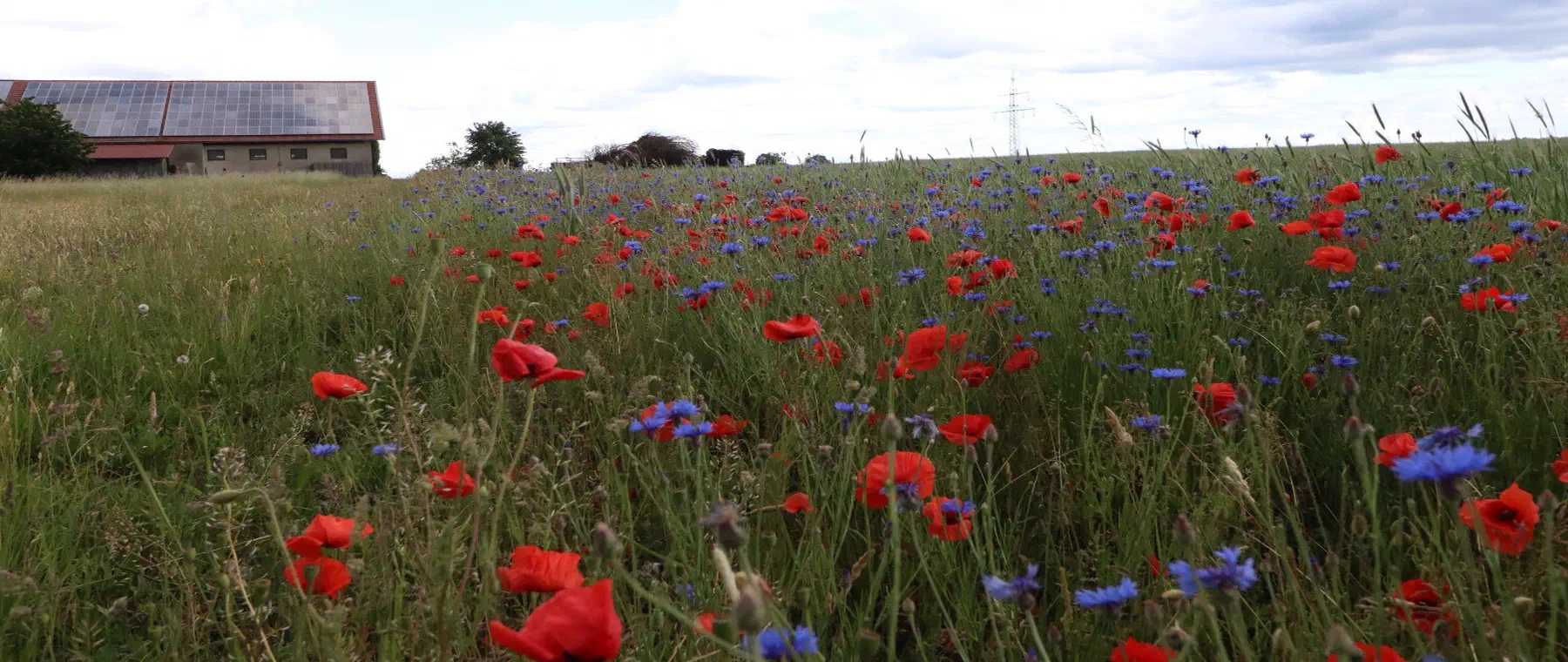
Extensification of arable areas and creation of lark windows, flower and arable margin strips in the intensively used fields of the Neckar basin and Kraichgau. These measures create food and breeding habitats for open-land species under § 44 BNatSchG.
Species protection CEF and FCS
Advance compensation measures under § 44 BNatSchG, such as replacement roosts for bats, artificial reptile habitats and spawning waters for amphibians. They are planned project-specifically and secure the preservation of ecological function of affected breeding and resting sites.
Protected species in the Neckar basin, Kraichgau and Löwenstein Hills
Sand lizard in vineyards and on railway embankments
The sand lizard inhabits sunny vineyard slopes, dry-stone walls, roadsides and railway embankments. During impacts, replacement habitats and relocations are regularly required as advance CEF measures under § 44 BNatSchG.
About this species ›Skylark in the Neckar basin and Kraichgau
The wide arable fields of the Gäu landscapes are habitat for skylark. Lark windows, flower strips and extensive arable margins are proven species protection measures for construction and infrastructure projects.
About this species ›Bats in forests and caves
The beech forests and caves of the Löwenstein and Heilbronn Hills as well as old buildings and traditional orchard stands provide roosts for strictly protected bat species of Annex IV of the FFH Directive. On demolition or tree felling, replacement roosts are required as CEF measures.
About this species ›Kingfisher on Neckar, Kocher and Jagst
The kingfisher breeds at near-natural bank sections of rivers in steep banks. Steep bank modelling and riverbank restoration are typical CEF measures for waterbody impacts.
About this species ›Black stork in forest areas
The large, disturbance-free broadleaf forests of the Löwenstein Hills provide breeding opportunities for the black stork, whilst it hunts in forest streams for food. Projects in forests require assessment of breeding sites and protection distances.
About this species ›Great crested newt in weirs and ponds
The great crested newt, a species of Annex II of the FFH Directive, inhabits fish-free weirs and ponds. New or restored spawning waters in spatial context secure its breeding sites during impacts.
About this species ›Which projects trigger a compensation obligation?
Expansion of A6 and A81
Six-lane expansion of the A6 with the new Neckar Valley crossing between Heilbronn and Neckarsulm and further sections on A6 and A81 significantly impact nature and landscape. Such projects trigger extensive compensation and replacement obligations, which can be covered via eco-points.
Industry, logistics and business
The economic sites Neckarsulm with Audi and the Schwarz Group as well as numerous business and logistics areas in the Neckar Valley create ongoing land requirements. Nature conservation compensation can be efficiently covered via provisioned eco-points.
Wine growing and land consolidation
Vineyard consolidation and redesign of vineyard areas change slopes, dry-stone walls and path networks. At the same time, many of these areas are suitable for high-value enhancement measures benefiting thermophilic species.
Wind energy and network expansion
Wind energy and infrastructure projects emerge on the forested heights of the Löwenstein Hills and along new transmission lines. These often require species protection assessments as well as FCS measures for wind-sensitive species.
From enquiry to monitoring
Contact and enquiry
Tell us your compensation requirement and the natural region. We check availability.
Offer and advice
A transparent offer covering measure types, scope and availability.
Coordination with authorities
Full coordination with the lower nature conservation authority. We handle everything.
Long-term monitoring
Permanent securing of the land, management and documentation across the contract term.
Eco-points in adjoining districts
All about eco-points
in the district of Heilbronn
Request eco-points in the district of Heilbronn
We will promptly prepare a transparent offer with matching eco-points held in stock in the district of Heilbronn.