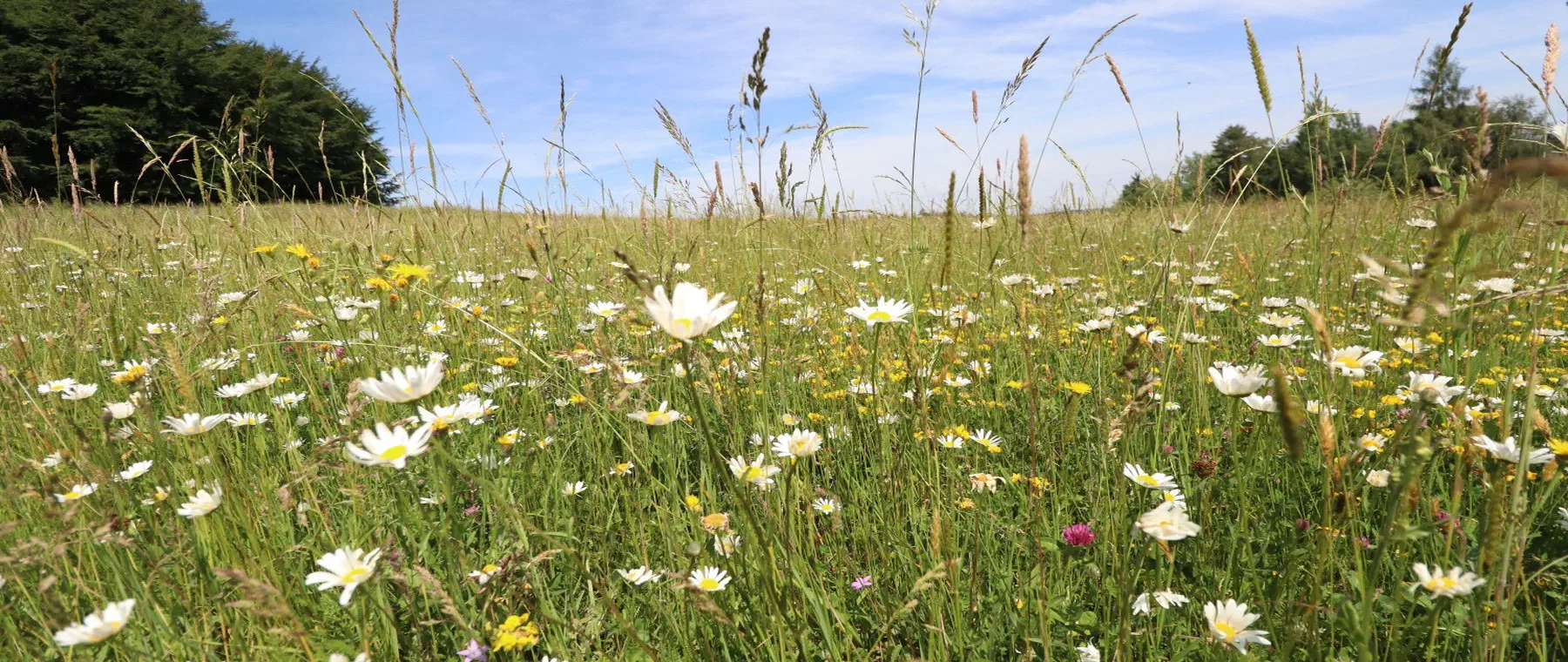
Eco-points and compensation areas
City of Heilbronn
Eco-points immediately available from officially recognised eco-accounts. greeNature solutions is your full-service partner for compensation under the Ökokonto-Verordnung (ÖKVO) in the Stadtkreis Heilbronn and the Neckarbecken.
The City of Heilbronn at a glance
Heilbronn is a Stadtkreis in the Stuttgart administrative region and the economic centre of the Heilbronn-Franken region. The city lies on both sides of the Neckar and is divided into nine neighbourhoods. The district of the same name, Landkreis Heilbronn, borders the city area, from which Heilbronn is administratively separate as an independent city.
In natural-region terms, the valley floor and open surrounding area belong to the Neckarbecken, a sub-landscape of BfN major natural region D57 (Neckar- und Tauberland, Gäuplatten). The basin is among the warmest and driest landscapes in south-west Germany and is shaped by shell limestone, loess and extensive vineyard sites. The wooded heights in the east, which lead into the Löwensteiner and Heilbronner Berge, by contrast belong to the Schwäbisches Keuper-Liasland (natural region D58).
Ecologically significant are the FFH sites Nördliches Neckarbecken, Löwensteiner und Heilbronner Berge, and Östlicher Kraichgau, which reach into the city area with partial areas. There are also five nature reserves, including the Köpfertal with its gorge and wet habitats, and the Altneckar Horkheim as a near-natural floodplain remnant. The sun-exposed vineyard terraces with their dry stone walls form a warmth-loving habitat island within the city.
The economy is shaped by winegrowing, industry, logistics and the Neckar port, and the Dieter Schwarz Foundation's Bildungscampus is growing into a significant science hub. Major urban development projects such as the Neckarbogen quarter on the former Federal Garden Show site, commercial land at the Böllinger Höfe, and transport projects regularly trigger impacts, whose compensation in Baden-Württemberg must be provided through eco-points under the Ökokonto-Verordnung (ÖKVO).
🗺️ Associated natural regions
Go to natural region D57 ›
Go to natural region D58 ›
📍 City districts
🌿 Ecological features
- FFH site Nördliches Neckarbecken, dry habitats and watercourses in the Neckar valley
- FFH site Löwensteiner und Heilbronner Berge, wooded Keuper heights in the east
- FFH site Östlicher Kraichgau, with partial areas in the western city area
- Köpfertal nature reserve, a gorge with wet habitats and ravine woodland
- Altneckar Horkheim nature reserve, a near-natural floodplain and oxbow remnant on the Neckar
- Frankenbacher Schotter and Schilfsandsteinbruch beim Jägerhaus nature reserves
- Vineyard terraces with dry stone walls as warmth-loving habitat islands
✅ greeNature on the ground
greeNature solutions operates nationwide and is versed in Baden-Württemberg's compensation law. We work routinely with the eco-point system under the Ökokonto-Verordnung (ÖKVO), coordinate with the lower nature conservation authorities of the city and district, and know the natural particulars of the Neckarbecken and the neighbouring Keuper hill country.
Typical measures in the city of Heilbronn
Watercourse and floodplain restoration
Reconnecting former channels and enhancing bank areas on the Neckar and its tributaries, for example around the Altneckar Horkheim. Such measures create spawning and breeding habitats, improve watercourse structure and generate eco-points under the ÖKVO's biotope value assessment.
Desealing and inner-city development
Removal of sealed surfaces and greening within the densely built-up city area, combined with restoring root-penetrable, living soils. Desealing is a particularly effective form of compensation in the urban context and also reduces urban heat stress.
Disused vineyards and dry stone walls
Enhancing abandoned vineyard land into calcareous grassland, and restoring and newly building dry stone walls on the slopes. These sunny structures are habitat for reptiles and wild bees and typical of the Heilbronn landscape.
Traditional orchards and grassland enhancement
Creating and managing traditional orchards, and extensifying grassland in the near-urban surrounding area through adapted mowing and no fertiliser use. Species-rich meadows and old fruit trees create habitats for birds, bats and insects.
Species protection CEF and FCS
Replacement roosts for bats on buildings and at woodland edges, habitat structures for the sand lizard on embankments and railway banks, and replacement spawning waters, each as an advance CEF or population-supporting FCS measure under § 44 BNatSchG.
Hedgerows and habitat network
Creating hedgerows, field copses and arable field margins in the open Gäu and Neckarbecken farmland. These structures connect habitats, form stepping-stone habitats, and enhance cleared agricultural land around the city.
Protected species in the Neckarbecken in the Heilbronn lowlands
Sand lizard in vineyards
The sunny vineyard terraces, dry stone walls and railway banks within the city are ideal habitats for the strictly protected sand lizard (Annex IV of the FFH Directive). For impacts, replacement habitats and relocations as a CEF measure are regularly required.
About this species ›Kingfisher on the Neckar
Near-natural bank sections of the Neckar and its tributaries provide the kingfisher with steep faces as breeding sites and fish-rich waters as foraging grounds. Bank restoration and steep-face modelling are typical measures for impacts on watercourses.
About this species ›Bats in the city and woodland
Buildings, old fruit trees and the woodland of the Heilbronner Berge provide roosts for several strictly protected bat species. Where demolition and refurbishment occur, replacement roosts and preserving foraging structures must be secured as a CEF measure.
About this species ›Amphibians in floodplains and wet habitats
Common frog, common toad and other species inhabit the wet habitats of the Köpfertal and the oxbows on the Neckar. Creating and connecting new spawning waters in spatial proximity secures their breeding sites during building projects.
About this species ›Great crested newt in standing waters
The great crested newt (Annex II and IV of the FFH Directive) needs larger, fish-free ponds with rich underwater vegetation and structurally rich terrestrial habitat nearby. Creating suitable spawning waters is a proven CEF and FCS measure in the Neckarbecken.
About this species ›Skylark in the Gäu farmland
The open arable landscapes of the Neckarbecken are breeding grounds for the skylark, whose populations are declining sharply due to more intensive land use. Skylark plots, flowering strips and extensively farmed field margins act as an FCS measure.
About this species ›Which projects trigger a compensation obligation?
Neckarbogen city quarter
On the former site of the 2019 Federal Garden Show, the Neckarbogen residential and business quarter is being built on the Neckar, providing housing for several thousand people. Housing construction and neighbourhood development of this scale creates impacts, whose compensation must be provided in eco-points under the ÖKVO.
Bildungscampus and experimenta
The Dieter Schwarz Foundation's Bildungscampus, with universities and research institutions, and the experimenta science and discovery centre, are continually growing. The expansion of campus and transport land in the city centre triggers compensation obligations under nature conservation law.
Böllinger Höfe commerce and logistics
The Böllinger Höfe industrial and commercial area in the north of the city, which includes an Audi production and logistics site, is being further developed. New land take for commerce and logistics requires compensation and replacement measures.
Transport and the Neckar port
Expansion of roads and rail lines, light rail connections, and transhipment and port facilities on the Neckar are among the infrastructure projects in the Stadtkreis Heilbronn that regularly require compensation.
From enquiry to monitoring
Contact and enquiry
Tell us your compensation requirement and the natural region. We check availability.
Offer and advice
A transparent offer covering measure types, scope and availability.
Coordination with authorities
Full coordination with the lower nature conservation authority. We handle everything.
Long-term monitoring
Permanent securing of the land, management and documentation across the contract term.
Eco-points in adjoining districts
All about eco-points
in the city of Heilbronn
Request eco-points in the city of Heilbronn
We will promptly prepare a transparent offer with matching eco-points held in stock in the city of Heilbronn.