Eco-points and compensation areas
District of Göppingen
Readily available eco-points from officially recognised eco-accounts under the Eco-account Regulation (ÖKVO). greeNature solutions, your full-service partner for compensation in the Fils Valley and foothills of the central Swabian Alb.
The District of Göppingen at a glance
Göppingen District lies in the administrative region of Stuttgart and extends along the Fils Valley from the foothills of the Swabian Alb to the alb plateau. As the core of the historical Staufen region, it reaches from forested heights in the north to the distinctive alb edge in the south.
Geologically, the district transition runs from the Swabian Keuper-Liasland (BfN large-scale area D58) to the Swabian Alb (D60). Layers of lower, middle and upper Jurassic form a small-scale mosaic of traditional orchard slopes, calcareous grasslands and rock biotopes of the alb edge.
Ecologically significant is the EU bird protection area Foothills of the central Swabian Alb (7323-441) with about 17,000 hectares in Göppingen and Esslingen districts. Added to these are the FFH site Filsalb (7423-342) and a total of 20 nature reserves on about 4.5 per cent of the district area.
The economy is strongly shaped by mechanical engineering and industry in the Fils Valley. Business development, transport projects and housing construction regularly create compensation requirements, which in Baden-Württemberg are assessed in eco-points via the Eco-account Regulation (ÖKVO).
🗺️ Associated natural regions
Go to natural region D58 ›
Go to natural region D60 ›
📍 Selected municipalities
🌿 Ecological features
- EU bird protection area Foothills of the central Swabian Alb (7323-441), about 17,000 ha in Göppingen and Esslingen districts
- FFH site Filsalb (7423-342) with calcareous grasslands and near-natural forests at the alb edge
- 20 nature reserves on about 2,887 ha, about 4.5 per cent of the district area
- Juniper heaths and calcareous grasslands of the central Swabian Alb, traditionally managed through sheep grazing
- Extensive traditional orchard stands on the alb foothills and in side valleys of the Fils
- Alb edge with rock biotopes, caves and old beech forests as habitat for specialised species
✅ greeNature on the ground
greeNature operates nationwide and is familiar with compensation law in Baden-Württemberg. We know the assessment in eco-points under the Eco-account Regulation (ÖKVO), the requirements of the lower nature conservation authority at Göppingen district office and the natural region particularities between Fils Valley and Swabian Alb. We guide project developers and landowners from initial assessment through to recognised compensation measure.
Typical measures in the district of Göppingen
Traditional orchards
Creation and renovation of traditional orchard stands on the alb foothills slopes, high-value habitat for collared flycatcher, wryneck and black redstart, and a proven component for eco-points under ÖKVO.
Juniper heaths and calcareous grasslands
Restoration and management of calcareous grasslands and juniper heaths of the Swabian Alb through extensive sheep grazing and scrub removal, valuable for butterflies, wild bees and reptiles.
Grassland extensification
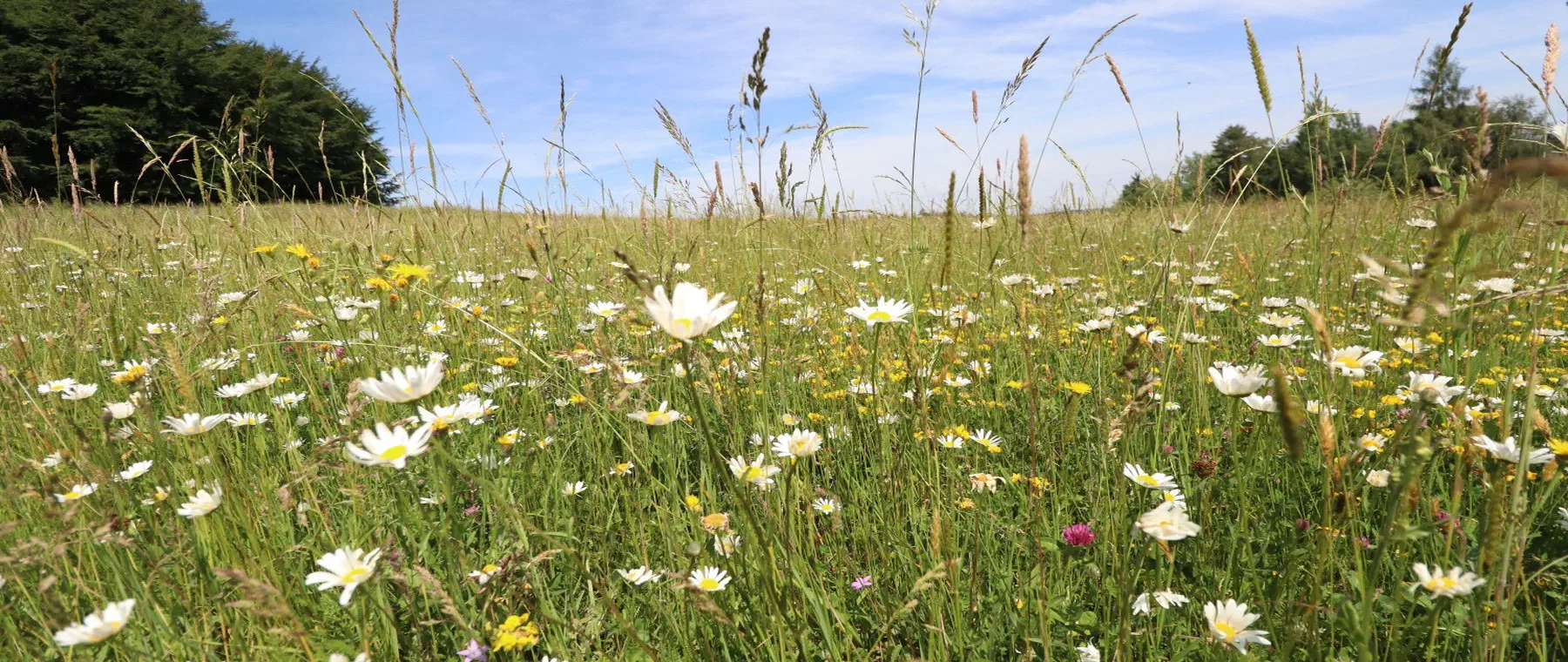
Conversion of intensively managed meadows into species-rich extensive grassland on the foothills of the central Swabian Alb, aligned with the protection objectives of the bird protection area for meadow birds.
Fils watercourse restoration
Restoration of the Fils and its tributaries, riverbank removal, creation of gravel and steep banks and floodplain forest development as habitat for kingfisher, bullhead and dragonflies.
Species protection CEF/FCS
Advance compensation measures (CEF) and measures to maintain conservation status (FCS) under § 44 BNatSchG, such as sand lizard habitats, bat roosts and amphibian waterbodies.
Hedgerows and habitat networks
Creation of hedgerows, field copses and stepping-stone habitats in the agricultural landscape of the Fils Valley to ecologically network traditional orchard slopes, valley floodplains and alb edge.
Protected species in the Fils Valley and foothills of the central Swabian Alb
Skylark and meadow birds
In the open alb foothills, skylark, quail and other species of the bird protection area Foothills of the central Swabian Alb breed. Lark windows, flower strips and extensive grassland are typical CEF measures for construction and infrastructure projects.
About this species ›Sand lizard on calcareous grasslands
Juniper heaths, railway embankments and slopes of the alb are core habitats for sand lizard. Creating sand lenses, stone heaps and dead wood structures is a frequent compensation measure in infrastructure projects.
About this species ›Bats in traditional orchards and caves
Large traditional orchard stands and the caves of the Swabian Alb provide roosts for large mouse-eared bat, Bechstein's bat and brown long-eared bat. Roost and hunting area measures secure conservation status under § 44 BNatSchG.
About this species ›Amphibians of Alb and floodplains
Yellow-bellied toad and great crested newt inhabit small waterbodies, quarries and wet areas in the district area. Newly created spawning waters and ponds are proven compensation measures for these strictly protected species.
About this species ›Kingfisher on the Fils
The Fils and its tributary waterbodies offer the kingfisher breeding opportunities at near-natural steep banks. Riverbank restoration and steep bank modelling deliberately create new breeding sites.
About this species ›Birds of the alb edge
Eagle owl, peregrine and black woodpecker occur at the cliffs and forests of the alb edge. Rock protection, disturbance reduction and old and dead wood concepts come into consideration as measures.
Which projects trigger a compensation obligation?
Mechanical engineering and industry in the Fils Valley
The district is a traditional site of mechanical engineering and metal processing. Facility expansions and new business areas along the Fils regularly trigger compensation and replacement obligations, which are assessed in eco-points under ÖKVO.
Rail transport and Fils Valley
Expansion and modernisation of rail infrastructure in the Fils Valley, including the new high-speed line in the upper Fils area, impact nature and landscape and create significant compensation requirements with CEF measures for reptiles and birds.
Road construction and alb ascent
Town bypasses, bridge structures and planned expansion of the A8 alb ascent between alb and foothills lead to impacts for which compensation must be provided in spatially suitable natural regions.
Settlement and renewable energies
Residential and business areas in Göppingen, Geislingen and Eislingen as well as photovoltaics and wind power projects on the alb require nature conservation compensation. Landowners can bring their property into eco-account areas.
From enquiry to monitoring
Contact and enquiry
Tell us your compensation requirement and the natural region. We check availability.
Offer and advice
A transparent offer covering measure types, scope and availability.
Coordination with authorities
Full coordination with the lower nature conservation authority. We handle everything.
Long-term monitoring
Permanent securing of the land, management and documentation across the contract term.
Eco-points in adjoining districts
All about eco-points
in the district of Göppingen
Request eco-points in the district of Göppingen
We will promptly prepare a transparent offer with matching eco-points held in stock in the district of Göppingen.