Eco-points and compensation areas
District of Esslingen
Readily available eco-points from officially recognised eco-accounts. greeNature is your full-service partner for compensation under the Eco-account Regulation (ÖKVO) in the central Neckar region between Filder plain and alb edge.
The District of Esslingen at a glance
Esslingen District lies in the central Neckar region south-east of Stuttgart, belongs to the administrative region of Stuttgart and the Stuttgart region. By population, it is one of the largest districts in Baden-Württemberg. Its landscape extends from the Filder plain and Neckar Valley through Schurwald and Schönbuch to the alb foothills and alb edge of the Swabian Alb.
Geologically the north is shaped by the Swabian Keuper-Liasland (natural region D58), with fertile loess soils on the Filder plain, forested Keuper heights in Schurwald and Schönbuch, and the Neckar Valley as valley axis. To the south the terrain rises over the alb foothills to the steep edge of the alb edge and the Jurassic limestones of the Swabian Alb (natural region D60).
Ecologically significant are the traditional orchard belt and juniper heaths at the alb edge, large forest areas in Schönbuch and Schurwald and the Neckar Valley. About 44 per cent of the district area is protected as nature or landscape reserve. The southern district has a share in the Swabian Alb Biosphere Area, plus several FFH sites and bird protection sites of the European Natura 2000 network.
Economically the district is strongly shaped by mechanical engineering and automotive suppliers and by airport and trade fair on the Filder. Large transport and infrastructure projects, above all the new Wendlingen-Ulm high-speed line, and dense settlement and business development regularly trigger impacts, the compensation for which in Baden-Württemberg must be provided under the Eco-account Regulation (ÖKVO) in eco-points.
🗺️ Associated natural regions
Go to natural region D58 ›
Go to natural region D60 ›
📍 Selected municipalities
🌿 Ecological features
- Share of the Swabian Alb Biosphere Area in the south of the district (over 85,000 ha, together with Reutlingen District and Alb-Donau District)
- FFH site Alb between Jusi and Teck at the alb edge, about 3,600 ha with juniper heaths, beech forests and calcareous grasslands
- Nature reserve Neuffener Heide at the alb edge, species-rich calcareous grasslands above Neuffen
- FFH sites Schönbuch, Schurwald and Filder as large connected forest and open-land areas
- Extensive traditional orchard belt at the alb edge and alb foothills between Kirchheim, Nürtingen and Neuffen
- Neckar Valley as defining river axis with Fils as significant tributary
- About 44 per cent of the district area under nature or landscape protection (26 nature reserves, 52 landscape reserves)
✅ greeNature on the ground
greeNature operates nationwide and manages compensation projects in Baden-Württemberg under the Eco-account Regulation (ÖKVO). We know the requirements of the lower nature conservation authority in Esslingen, the natural regions Swabian Keuper-Liasland (D58) and Swabian Alb (D60) and the high compensation requirements in the densely populated central Neckar region from practice.
Typical measures in the district of Esslingen
Maintain and create traditional orchards
Preservation, replanting and new creation of traditional orchard stands at the alb edge and alb foothills. These stands are habitat for little owl, wryneck and collared flycatcher and are assessed in eco-points under ÖKVO.
Manage calcareous grasslands and juniper heaths
Restoration and management of calcareous grasslands and juniper heaths at the alb edge, for example in the Neuffener Heide area, through scrub removal and sheep and goat grazing. This preserves species-rich open-land biotopes.
Floodplain restoration on Neckar and Fils
Removal of riverbank paving, connection of old arms and development of floodplain forest and steep banks. Such measures create habitat for kingfisher, fish and amphibians along valley waterbodies.
Arable extensification on Filder plain
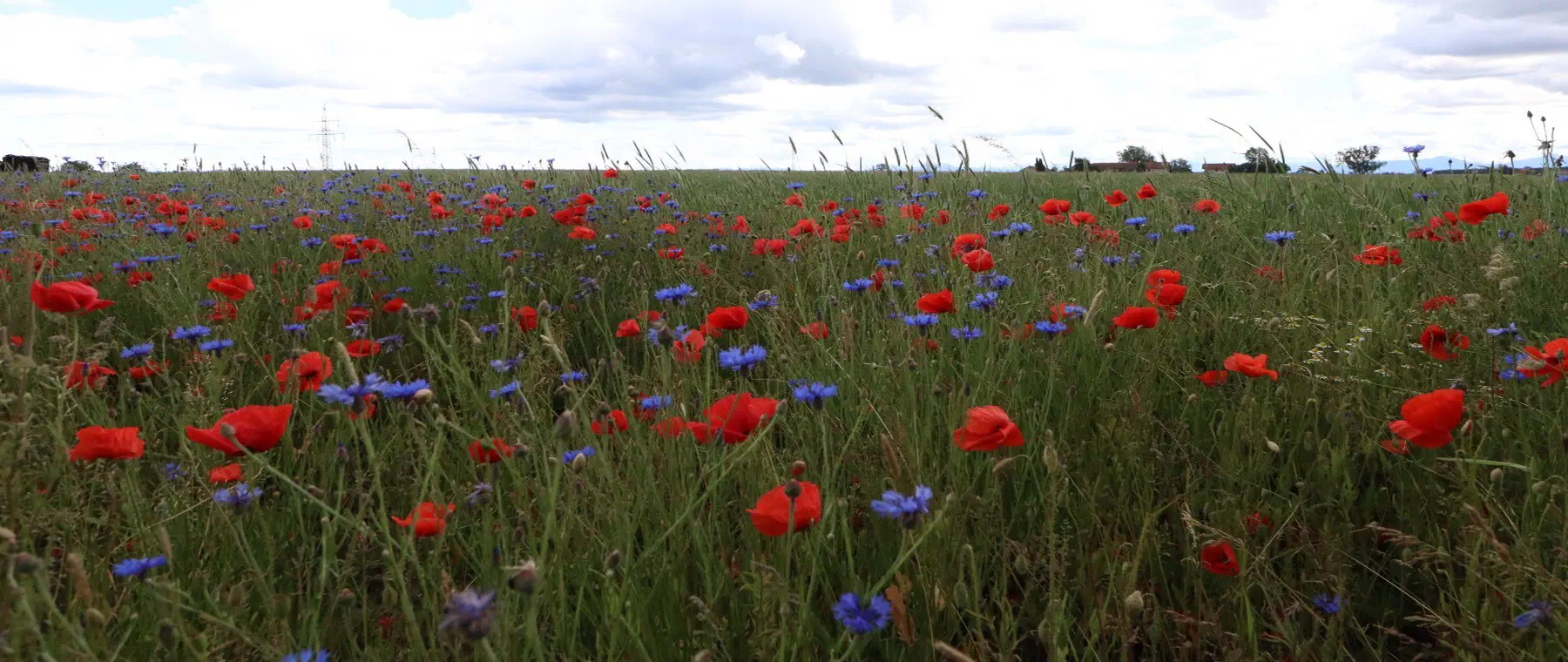
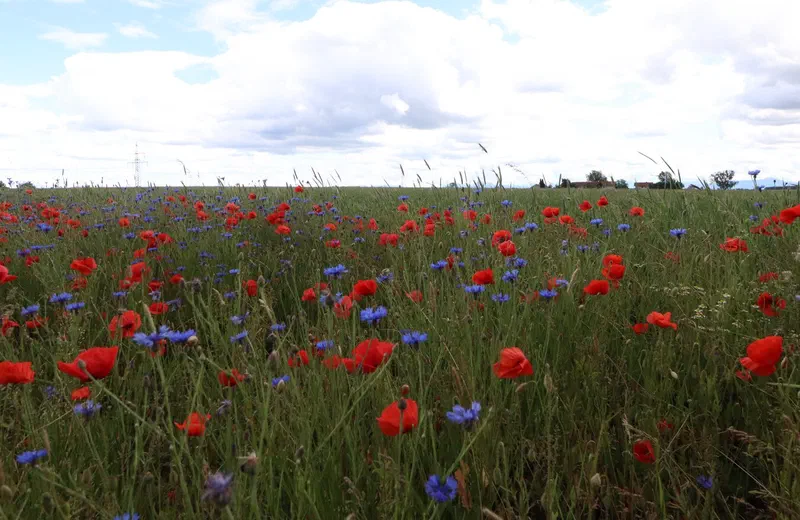
Extensification of intensively managed loess arable areas, creation of lark windows, flower strips and arable margins. This creates habitats for field birds and insects in the cleared agricultural landscape.
Species protection CEF and FCS
Replacement habitats for sand lizard on railway embankments and slopes, bat roosts in traditional orchards and buildings as well as replacement spawning waters for amphibians, each as advance CEF or population-supporting FCS measure under § 44 and § 45 BNatSchG.
Hedgerows, field copses and habitat networks
Creation of hedgerows and field copses on the alb foothills and Filder. These structures network traditional orchard belts, forest and open land and create stepping-stone biotopes for birds, reptiles and wild bees.
Protected species in the Central Neckar region between Filder and alb edge
Bats in traditional orchards and at the alb edge
Large mouse-eared bat, Bechstein's bat and further species use traditional orchard stands, forests and rock crevices at the alb edge. All species are strictly protected (Annex IV FFH Directive). On demolition and hedge loss, replacement roosts are required as CEF measure.
About this species ›Sand lizard on railway and road embankments
The sand lizard inhabits railway embankments, slopes and quarries in the district area. It is a frequent target species in infrastructure projects such as the Wendlingen-Ulm new high-speed line and expansion of the A8. Relocation and replacement habitats are typical CEF measures.
About this species ›Yellow-bellied toad and amphibians
Yellow-bellied toad, common toad and grass frog inhabit ponds, quarries and seasonally wet depressions on the alb foothills. Replacement spawning waters and land habitats in spatial context secure their breeding sites during construction and extraction projects.
About this species ›Great crested newt in weirs on alb foothills
The great crested newt (Annex II and IV of the FFH Directive) requires larger, fish-free weirs with rich underwater vegetation as well as structurally rich land habitats. New creation and networking of suitable spawning waters are proven CEF and FCS measures.
About this species ›Skylark on Filder plain
The skylark breeds in the open arable landscapes of the Filder. As an open-land bird species, it suffers from use intensification. Lark windows, flower areas and extensive arable margins are effective compensation measures.
About this species ›Kingfisher on Neckar and Fils
Near-natural sections of Neckar and Fils offer the kingfisher steep banks as breeding sites. During waterbody impacts, steep bank modelling and riverbank restoration are typical CEF measures for this strictly protected species.
About this species ›Which projects trigger a compensation obligation?
Rail transport (Wendlingen-Ulm new high-speed line)
The Wendlingen-Ulm new high-speed line runs with the Filder foothills tunnel between Wendlingen on Neckar and Kirchheim under Teck through the district and connects via the Filder railway station airport and trade fair. Such major projects create extensive compensation requirements under ÖKVO.
Airport and trade fair on Filder
Stuttgart airport and trade fair in Leinfelden-Echterdingen, the Filder railway station of the Stuttgart 21 rail project and surrounding business areas lead to impacts on fertile Filder soils and trigger compensation and replacement obligations.
Mechanical engineering and automotive suppliers
Facility expansions and new business areas of the strong industry in Esslingen, Nürtingen, Kirchheim and Plochingen lead to land sealing. greeNature supports companies in providing and utilising eco-points.
Settlement development and road expansion
Residential and business construction in the densely populated Neckar region as well as expansion of A8, B10 and B27 require nature conservation compensation. Property owners can contribute suitable areas as eco-accounts and remain owners.
From enquiry to monitoring
Contact and enquiry
Tell us your compensation requirement and the natural region. We check availability.
Offer and advice
A transparent offer covering measure types, scope and availability.
Coordination with authorities
Full coordination with the lower nature conservation authority. We handle everything.
Long-term monitoring
Permanent securing of the land, management and documentation across the contract term.
Eco-points in adjoining districts
All about eco-points
in the district of Esslingen
Request eco-points in the district of Esslingen
We will promptly prepare a transparent offer with matching eco-points held in stock in the district of Esslingen.