Eco-points and compensation areas
District of Böblingen
Readily available eco-points from officially recognised eco-accounts. greeNature is your nationwide full-service partner for compensation under the Eco-account Regulation (ÖKVO) between Schönbuch and Heckengäu.
The District of Böblingen at a glance
Böblingen District lies south-west of Stuttgart and belongs to the administrative region of Stuttgart. The district seat is Böblingen, the most densely populated city is Sindelfingen. With around 395,000 inhabitants on 617.8 km², the district ranks among the most densely populated and economically strongest districts in Baden-Württemberg.
Geographically the district divides into two natural large-scale areas. The north and west belong to the Neckar and Tauber Gäuplatte (natural region D57) with the fertile loess soils of the Upper Gäue and the structured Heckengäu. The south and east are shaped by the forested Keuper hill country of the Swabian Keuper-Liasland (natural region D58) with Schönbuch and Glemswald.
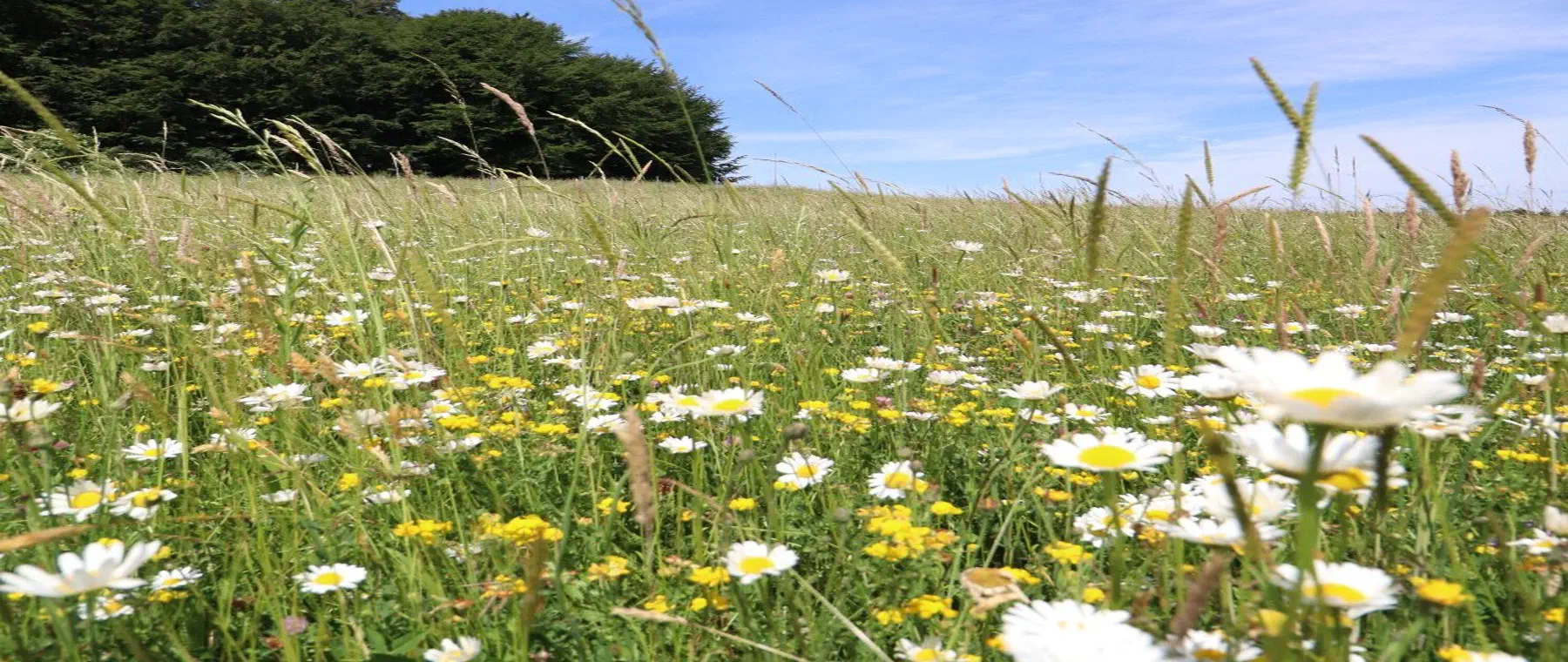
Ecologically significant above all is the Schönbuch Nature Park, Baden-Württemberg's first nature park (1972). Large areas are part of the FFH site Schönbuch (7420-341) and the bird protection site Schönbuch (7420-441) of the European Natura 2000 network. The Heckengäu with its juniper heaths, calcareous grasslands and name-giving field hedgerows, as well as the traditional orchard belts of the Schönbuch edge municipalities form further valuable habitats.
The economy is shaped by the automobile and high-tech industries, including the Mercedes-Benz plant Sindelfingen and research locations in Böblingen. The ongoing settlement and business pressure in the Stuttgart region as well as transport and energy projects regularly trigger impacts, the compensation for which must be provided in eco-points under ÖKVO.
🗺️ Associated natural regions
Go to natural region D57 ›
Go to natural region D58 ›
📍 Selected municipalities
🌿 Ecological features
- Schönbuch Nature Park, Baden-Württemberg's first nature park (1972)
- FFH site Schönbuch (7420-341) and bird protection site Schönbuch (7420-441) in the Natura 2000 network
- Heckengäu with juniper heaths, calcareous grasslands and name-giving field hedgerows
- Traditional orchard belt of the Schönbuch edge municipalities with high structural diversity
- Upper Gäue with fertile loess soils and open field area
- Flowing waters Würm, Aich, Schwippe and Ammer as habitat network corridors
✅ greeNature on the ground
greeNature operates nationwide and also serves the Stuttgart region. We know the natural region particularities of Schönbuch and Heckengäu, the assessment in eco-points under the Eco-account Regulation (ÖKVO) and coordination with the lower nature conservation authority at Böblingen district office from practice.
Typical measures in the district of Böblingen
Traditional orchards
Creation and management of traditional orchard stands at the Schönbuch edges and in the Gäu, habitat for little owl, wryneck and rare wild bees. High-stems, extensive mowing and replanting secure stocks long-term.
Juniper heaths and calcareous grasslands
Restoration and grazing of calcareous grasslands and juniper heaths in the Heckengäu, habitat for thermophilic insects, orchids and reptiles. Scrub removal and sheep grazing maintain open structures.
Near-natural forest conversion
Development of structurally and dead-wood-rich broadleaf mixed forests as well as graduated forest edges in Schönbuch and Glemswald, promotion of old and cavity trees as roosts for bats and woodpeckers.
Flowing watercourse restoration
Revitalisation of Würm, Aich, Schwippe and Ammer through riverbank removal, watercourse margins and connection of floodplain areas, improvement of living conditions for kingfisher, fish and amphibians.
Species protection CEF and FCS
Advance compensation measures (CEF) for sand lizard on railway embankments and slopes, bat roosts in traditional orchards and forests as well as FCS measures under § 44 BNatSchG, tailored to the specific project.
Hedgerows and habitat networks
Creation of field hedgerows, margins and stepping-stone habitats in the open Gäu landscape, networking of habitats for skylark, hazel dormouse, brown hare and wild bees between Heckengäu and Schönbuch.
Protected species in the Schönbuch and Heckengäu in the Stuttgart region
Sand lizard
Frequent target species in infrastructure and settlement projects. Railway embankments, slopes and calcareous grassland sites in the district offer habitat. Typical are advance CEF measures with stone lines, sand lenses and habitat design.
About this species ›Skylark
Characteristic bird of the open Gäu landscape with its loess arable soils. Decline through use intensification makes it an important target species. Measures are lark windows, flower strips and extensive field margin structures.
About this species ›Bats
Schönbuch and Glemswald host forest-dependent species such as Bechstein's bat and large mouse-eared bat. Old and cavity trees as well as traditional orchard stands serve as roosts and hunting grounds. Roost protection and forest margin management are typical measures.
About this species ›Hazel dormouse
The hazel dormouse inhabits structurally rich forest edges, hedgerows and shrub areas in Schönbuch and Heckengäu. As a strictly protected species of Annex IV of the FFH Directive, it must be taken into account in hedgerow impacts, for example through habitat networking.
About this species ›Amphibians
Yellow-bellied toad and great crested newt use seasonally wet small waterbodies and forest pools in the district. Newly created spawning waters and networking of wet biotopes are frequent compensation measures for impacts on their habitats.
About this species ›Wildcat
For the forest areas of Schönbuch, there are records of European wildcat, which is expanding again in Baden-Württemberg. Disturbance-free, dead-wood-rich forests and networked shrub structures support the species.
About this species ›Which projects trigger a compensation obligation?
Automobile and high-tech industry
The Mercedes-Benz plant Sindelfingen and research and development locations in Böblingen shape the district. Facility and business expansions as well as new production and logistics areas regularly create compensation requirements under §§ 13 to 15 BNatSchG.
Transport and infrastructure
The motorways A81 and A8, the expansion of the Gäubahn and S-Bahn as well as town bypasses and bridge structures trigger compensation and replacement obligations, which are covered via eco-points under ÖKVO.
Settlement and business development
The ongoing residential and business pressure in the Stuttgart region leads to building area designations in many district municipalities. Impacts on soil and nature must be compensated for under nature conservation law, often through recognised eco-accounts.
Renewable energies
Free-area photovoltaics on Gäu areas and wind power sites on the ridges require nature conservation compensation as well as species protection assessments and possibly FCS measures for birds of prey and bats.
From enquiry to monitoring
Contact and enquiry
Tell us your compensation requirement and the natural region. We check availability.
Offer and advice
A transparent offer covering measure types, scope and availability.
Coordination with authorities
Full coordination with the lower nature conservation authority. We handle everything.
Long-term monitoring
Permanent securing of the land, management and documentation across the contract term.
Eco-points in adjoining districts
All about eco-points
in the district of Böblingen
Request eco-points in the district of Böblingen
We will promptly prepare a transparent offer with matching eco-points held in stock in the district of Böblingen.