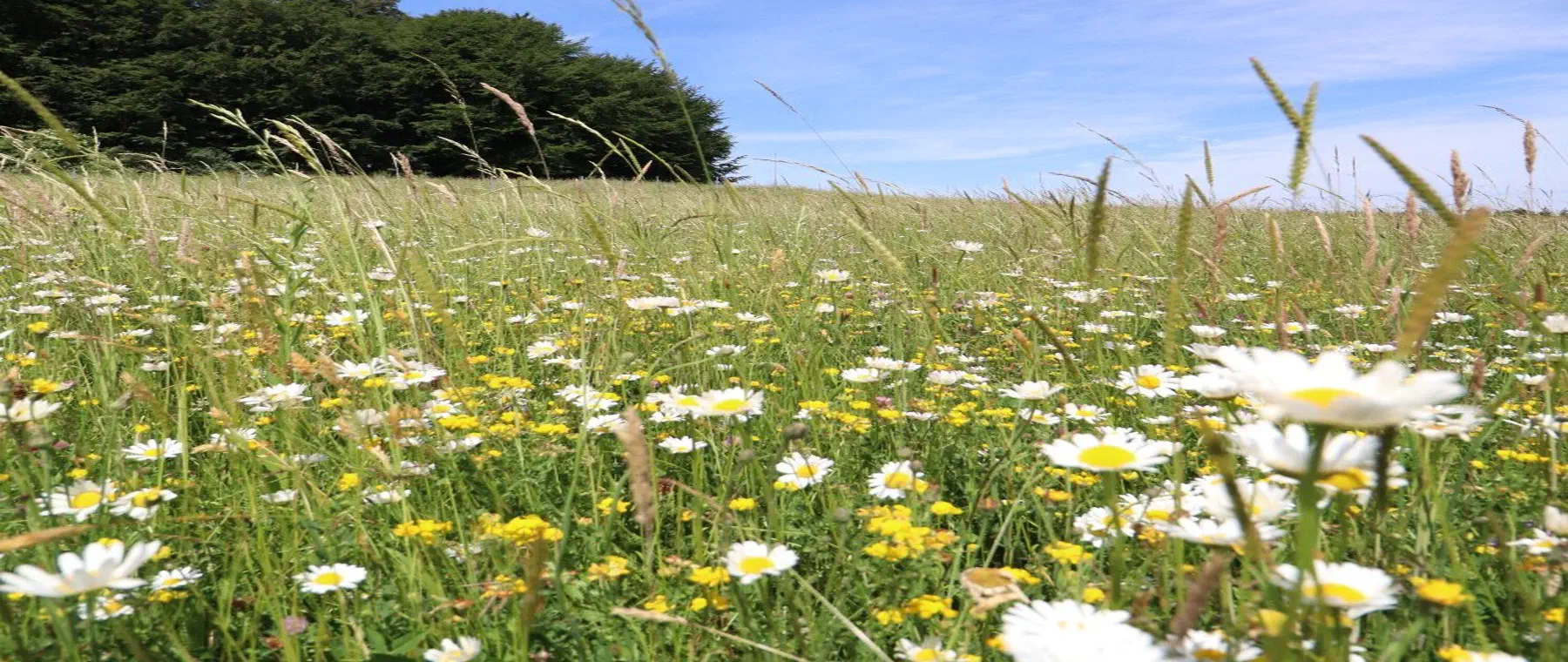
Eco-points and compensation areas
District of Bodenseekreis
Eco-points in Bodensee District, available in the short term. greeNature develops, secures and manages compensation areas under the Eco-account Regulation (ÖKVO) and takes on compensation from impact assessment through to permanent management.
The District of Bodenseekreis at a glance
Bodensee District lies at the far south of Baden-Württemberg on the northern shore of Lake Constance and belongs to the administrative region of Tübingen. District seat and seat of the district office is Friedrichshafen. To the south the lake forms the border to Austria and Switzerland, to the north the district extends into the Upper Swabian hill country. On just over 664 km² live about 220,800 people in 23 towns and municipalities.
Geographically, two areas shape the district. The Lake Constance basin was glacially formed by the Rhine glacier and is lined with shallow water zones, riverbank meadows and fen areas. In the hinterland, the Upper Swabian hill country adjoins with moraine ridges, drumlins and individual moor remnants. Both units are encompassed in the BfN's natural region classification as natural region D66, Pre-Alpine hill and moorland.
Ecologically the district is of high significance. Eriskirch Ried between Rotach and Schussen mouths is the largest contiguous nature reserve on the northern Lake Constance shore and also an FFH and bird protection site in the European Natura 2000 network. Meadow and wet meadows, floodplain forest remnants, reed beds and the shallow water zone offer habitat for numerous strictly protected species, making species protection under § 44 BNatSchG a regular central issue in projects.
Economically, Bodensee District ranks among the region's most innovative. Around Friedrichshafen, vehicle and propulsion technology (ZF Friedrichshafen, Rolls-Royce Power Systems) as well as air and aerospace concentrate, plus fruit and wine growing, Tettnang hops and strong tourism. Settlement, business and infrastructure projects accordingly frequently trigger a compensation obligation under §§ 13 to 15 BNatSchG, which is covered by eco-points.
🗺️ Associated natural regions
Go to natural region D66 ›
📍 Selected municipalities
🌿 Ecological features
- Eriskirch Ried, the largest contiguous nature reserve on the northern Lake Constance shore, also an FFH and bird protection site.
- Lake Constance shore with shallow water zones, reed belts and meadow areas as Natura 2000 backdrop of European rank.
- Schussen and Rotach with mouth areas and floodplain forest remnants as networking corridors for fish, amphibians and kingfisher.
- Upper Swabian hill country with moraines, drumlins and moor remnants in the northern district area.
- Traditional orchard, wine and fruit-growing landscape around Meersburg, Hagnau and Kressbronn as well as Tettnang hops.
- High use pressure from high-tech industry, tourism and settlement in the Friedrichshafen area.
✅ greeNature on the ground
greeNature operates nationwide and guides project developers in Bodensee District from initial impact assessment through long-term site management. We secure eco-points from recognised eco-account measures under the Eco-account Regulation (ÖKVO), coordinate measures with the lower nature conservation authority and take on creation, monitoring and permanent maintenance. This ensures compensation obligations from business, transport and housing projects are legally secure and without delay in the permitting process.
Typical measures in the district of Bodenseekreis
Meadow and wet meadows
Restoration and extensive management of wet and meadow areas in fen areas on the Lake Constance shore, with late mowing and without fertiliser for the benefit of rare meadow species.
Watercourse restoration
Removal of riverbank paving as well as creation of watercourse margins on Schussen, Rotach and their tributaries to improve floodplain dynamics and continuity.
Traditional orchards
New creation and renovation of traditional orchard stands with high-stemmed varieties, which create habitat for cavity-breeding birds, bats and insects.
Small waterbodies and spawning habitats
Creation of sunlit ponds and spawning waters for amphibians, supplemented by land habitats from hedgerows, margins and stone heaps.
Floodplain forest and riverbank vegetation
Development of site-appropriate floodplain forest stands and riverbank vegetation along flowing waters as networking corridors and shading.
Grassland extensification
Conversion of intensively managed areas in the hill country into species-rich extensive grassland with adapted grazing or mowing.
Protected species in the Northern Lake Constance shore and western Upper Swabia
Northern lapwing
The northern lapwing breeds in open, wet meadows and fen areas. Ground-breeding birds respond sensitively to drainage and use intensification, which is why rewetted wet meadows are particularly effective as compensation.
About this species ›Sand lizard
The sand lizard inhabits slopes, railway embankments and margins. During impacts, advance compensation measures (CEF) with replacement habitats from stone lines and sand lenses are often required.
About this species ›Bats
Floodplain forests, traditional orchards and buildings in the district serve bats as roost and hunting area. All species are strictly protected, roost losses are balanced through replacement roosts and habitat structures.
About this species ›Amphibians
Fens, ponds and ditch systems host numerous amphibian species. New sunlit spawning waters with networked land habitats secure populations as part of compensation.
About this species ›Kingfisher
On Schussen and Rotach, the kingfisher depends on structurally rich banks with steep banks and clear water. Watercourse restoration promotes breeding opportunities and food supply.
About this species ›Skylark
In the open agricultural landscape of the hill country, the skylark breeds on the ground. Lark windows and extensively farmed field margin strips serve as suitable compensation measures.
About this species ›Which projects trigger a compensation obligation?
Business and industrial areas
Expansions of vehicle, propulsion as well as air and aerospace industries around Friedrichshafen lead to land consumption and corresponding compensation requirements.
Transport infrastructure
Expansion and conversion of roads like the B31, cycle paths and measures at Bodensee-Airport Friedrichshafen trigger impacts on nature and landscape.
Residential and settlement construction
New building areas in growing towns and municipalities on the lake shore require compensation under §§ 13 to 15 BNatSchG.
Renewable energies
Free-area photovoltaics in the Upper Swabian hill country and network expansion bring additional compensation and replacement requirements.
From enquiry to monitoring
Contact and enquiry
Tell us your compensation requirement and the natural region. We check availability.
Offer and advice
A transparent offer covering measure types, scope and availability.
Coordination with authorities
Full coordination with the lower nature conservation authority. We handle everything.
Long-term monitoring
Permanent securing of the land, management and documentation across the contract term.
Eco-points in adjoining districts
All about eco-points
in the district of Bodenseekreis
Request eco-points in the district of Bodenseekreis
We will promptly prepare a transparent offer with matching eco-points held in stock in the district of Bodenseekreis.