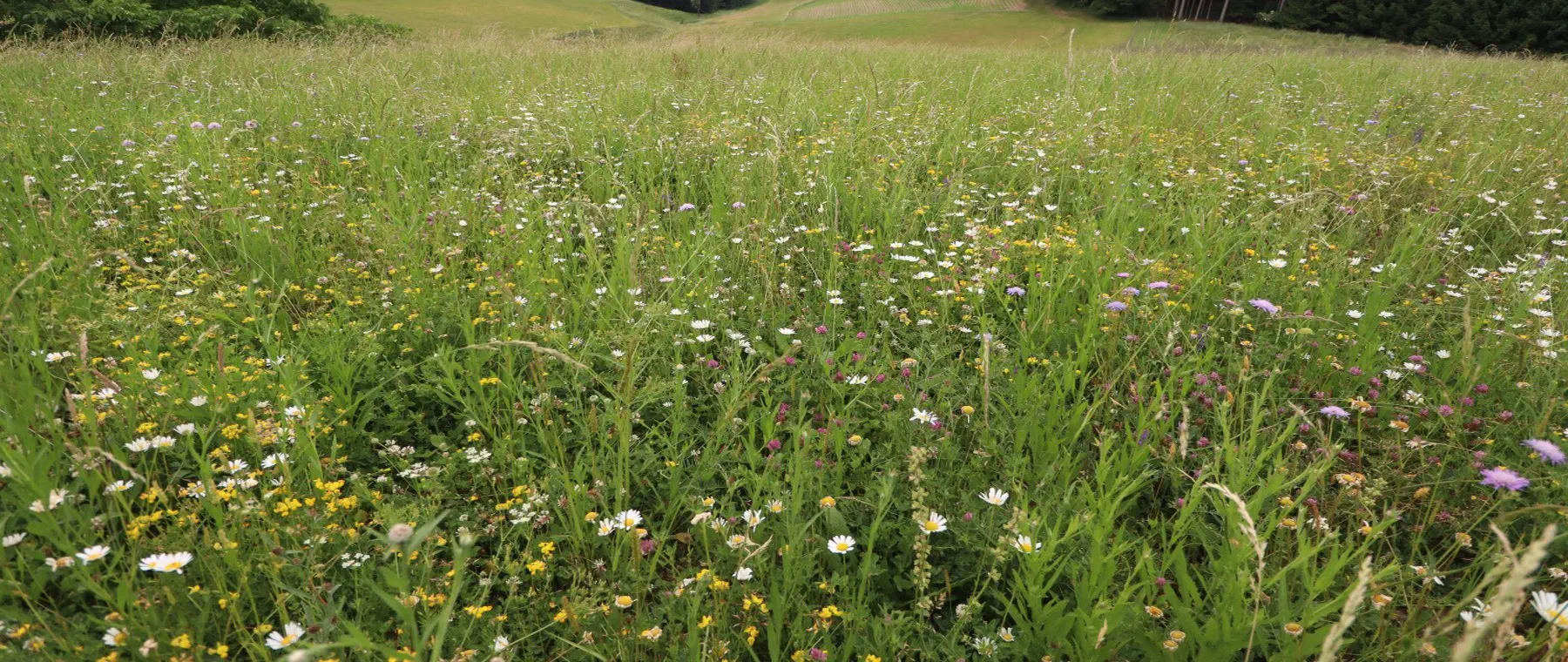
Eco-points and compensation areas
District of Biberach
Readily available eco-points from officially recognised eco-accounts, assessed under the Eco-account Regulation (ÖKVO). greeNature is your nationwide full-service partner for compensation in Upper Swabia between Danube Valley, Riß and Federsee Basin.
The District of Biberach at a glance
Biberach District lies in the administrative region of Tübingen and forms, together with Alb-Donau District and the city of Ulm, the Baden-Württemberg part of the Danube-Iller region. With about 1,410 km², it is one of the largest districts by area in the state. The district seat is Biberach on the Riß, with further economic centres at Laupheim, Riedlingen and Ochsenhausen.
Geographically the district is part of Upper Swabia. The north and basin areas belong to the BfN natural region D64 (Danube-Iller-Lech Plateaus) with the Danube Valley around Riedlingen, the Danube-Ablach plateaus and the Federsee Basin. The south, shaped by drumlins and moraine ridges from the Riß glaciation, falls within natural region D66 (Pre-Alpine hill and moorland, Upper Swabian Hill Country).
Ecologically outstanding is the Federsee near Bad Buchau, the largest contiguous moorland of south-west Germany. It is a nature reserve, European bird protection area and FFH site (Federsee and Blinder See near Kanzach) and holds the status of UNESCO World Heritage for its prehistoric pile dwellings. Added to these are the Danube floodplains, the flowing waters Riß and Rot, and numerous low and transitional moors.
The economy is above average in strength and breadth, with companies such as Boehringer Ingelheim, Liebherr and Handtmann in Biberach as well as Diehl Aviation and Kässbohrer in Laupheim. Facility expansions, transport projects such as the B30 expansion, business areas and free-area photovoltaics regularly trigger impacts, the compensation for which in Baden-Württemberg must be provided in eco-points under ÖKVO.
🗺️ Associated natural regions
Go to natural region D64 ›
Go to natural region D60 ›
Go to natural region D66 ›
📍 Selected municipalities
🌿 Ecological features
- Federsee near Bad Buchau, largest contiguous moorland of south-west Germany, nature reserve and European bird protection area
- FFH site Federsee and Blinder See near Kanzach, also UNESCO World Heritage (prehistoric pile dwellings)
- Danube Valley and Donauried in the north around Riedlingen with floodplain forests and wet meadows
- Riß and Rot as defining flowing waters of the Upper Swabian Plateau
- Moraine landscape from the Riß glaciation with drumlins, dead ice pits and small lakes
- Bussen as distinctive remnant hill with calcareous grassland and traditional orchards
- Numerous low and transitional moors as eco-point-rich compensation landscape under ÖKVO
✅ greeNature on the ground
greeNature operates nationwide and develops compensation areas in Upper Swabia too. We work routinely with the Eco-account Regulation (ÖKVO), know eco-account practice in Baden-Württemberg and the requirements of the lower nature conservation authority at Biberach district office. In particular, the moor and grassland sites around Federsee offer a high-quality backdrop for compensation measures.
Typical measures in the district of Biberach
Moor restoration and rewetting
Raising water levels in drained low and transitional moors of Upper Swabia, for example in the Federsee Basin area. Rewetting binds carbon, creates peat-forming habitats and generates high eco-point enhancement under ÖKVO.
Grassland extensification
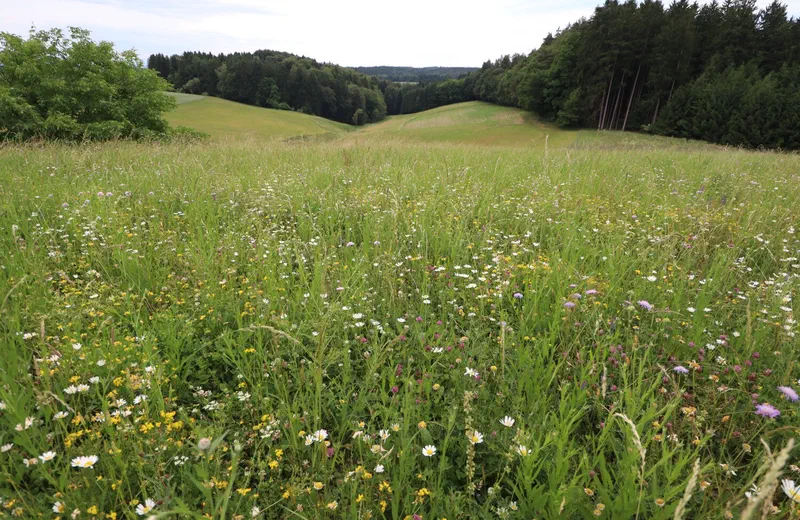
Conversion of intensively managed meadows and arable land into species-rich, late-cut wet grassland. The meadow and wet meadows are habitat for meadow birds such as northern lapwing and for numerous insect species.
Flowing watercourse restoration
Removal of riverbank paving, creation of watercourse margins and restoration of continuity on Riß, Rot and Danube. Near-natural banks offer habitats for kingfisher, beaver and fish.
Traditional orchards
Creation and management of high-stemmed fruit stands on the moraine slopes of Upper Swabia. Old fruit trees create cavities for bats and cavity-breeding birds and link open land with settlement edges.
Species protection CEF and FCS
Tailored measures for species protection conflicts, such as habitat areas and reptile strips for sand lizard, spawning waters for amphibians and roosts for bats, coordinated to the specific species protection assessment.
Hedgerows and habitat networks
New creation of hedgerows, field copses and stepping-stone habitats in the cleared field area of the Upper Swabian Plateau, to network habitats for skylark, brown hare and wild bees.
Protected species in the Upper Swabia and Federsee Basin
Northern lapwing and meadow birds at Federsee
Federseeried and surrounding wet meadows are among the most important meadow bird areas of south-west Germany. Typical measures are rewetting, extensive grassland management and the creation of pools as advance compensation measures (CEF).
About this species ›Great crested newt in moor ponds
In the small waterbodies and moor channels of Upper Swabia, the great crested newt (Annex II and IV FFH Directive) occurs. Newly created, fish-free spawning waters are an effective CEF measure for securing breeding sites.
About this species ›Kingfisher and beaver on Riß and Danube
Near-natural banks with steep banks and oxbows on Riß, Rot and Danube offer habitat for kingfisher and beaver. Riverbank restoration and watercourse margins improve these habitats.
About this species ›Bats in forests and traditional orchards
Old deciduous forests, traditional orchard stands and buildings in the district are hunting and resting habitat for several bat species. Roost aids and the preservation of cavity trees secure breeding and resting places protected under § 44 BNatSchG.
About this species ›Skylark in the field area
In the open arable landscape of the Upper Swabian Plateau, the skylark breeds as a ground-nesting bird. Lark windows, flower strips and extensively farmed arable areas serve as CEF and FCS measures.
About this species ›Sand lizard on railway embankments and extraction sites
Railway embankments, gravel pits and slopes are habitat for the strictly protected sand lizard. For infrastructure and construction projects, habitat areas with stone heaps and deterrent measures are frequent species protection measures.
About this species ›Which projects trigger a compensation obligation?
Pharmaceuticals and industry
Sites such as Boehringer Ingelheim, Liebherr and Handtmann in Biberach as well as Diehl Aviation and Kässbohrer in Laupheim regularly expand production and research facilities. Such projects create compensation requirements, which must be balanced in eco-points under ÖKVO.
Infrastructure and transport
Expansion of the B30 between Ulm and Lake Constance, measures on B311 and B312 as well as town bypasses and rail projects trigger compensation and replacement obligations under §§ 13 to 15 BNatSchG.
Settlement and business
New residential and business areas in Biberach, Laupheim, Riedlingen and surrounding municipalities require nature conservation compensation. Landowners can bring their areas into the eco-account system.
Energy and renewable energies
Free-area photovoltaics on arable sites and wind energy installations in Upper Swabian forests require compensation and, if wind-sensitive species are affected, measures to maintain favourable conservation status (FCS).
From enquiry to monitoring
Contact and enquiry
Tell us your compensation requirement and the natural region. We check availability.
Offer and advice
A transparent offer covering measure types, scope and availability.
Coordination with authorities
Full coordination with the lower nature conservation authority. We handle everything.
Long-term monitoring
Permanent securing of the land, management and documentation across the contract term.
Eco-points in adjoining districts
All about eco-points
in the district of Biberach
Request eco-points in the district of Biberach
We will promptly prepare a transparent offer with matching eco-points held in stock in the district of Biberach.