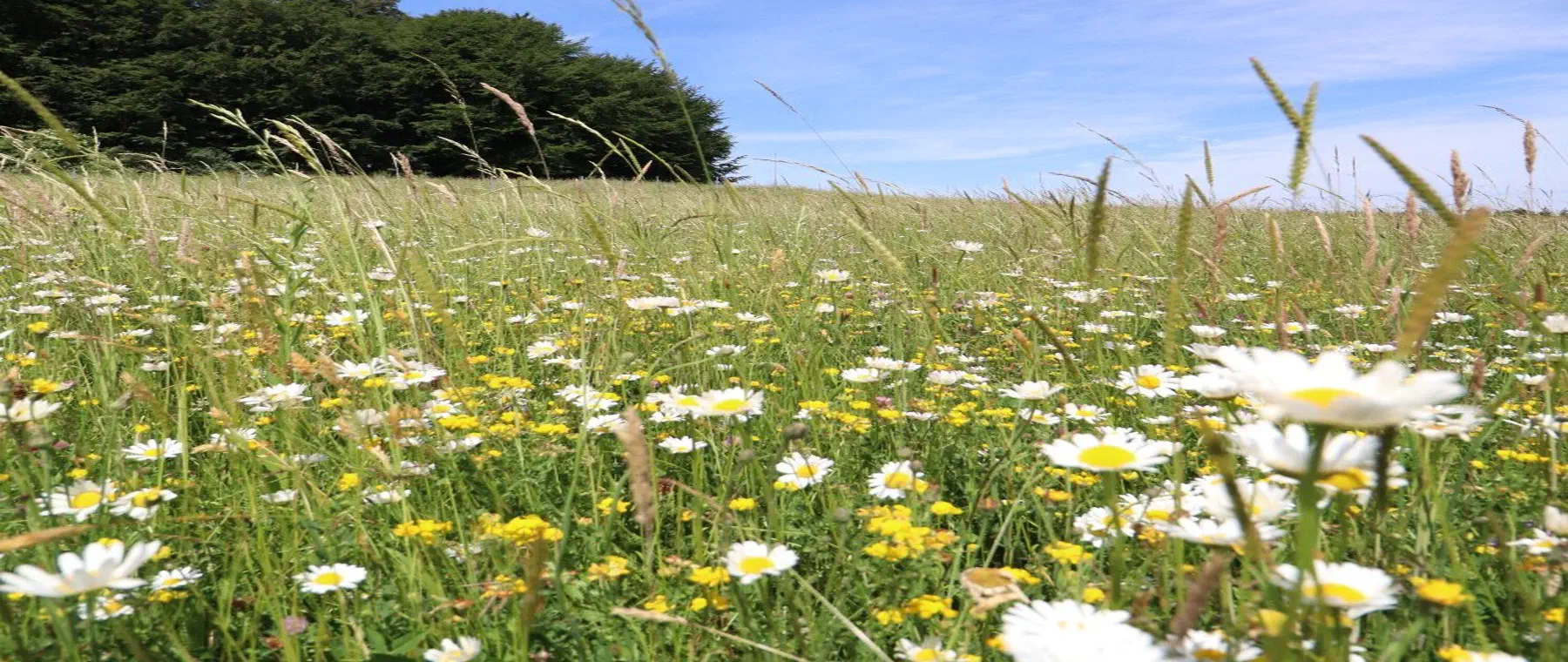
Eco-points and compensation areas
District of Alb-Donau-Kreis
Readily available eco-points from officially recognised eco-accounts for impacts in Alb-Donau District. greeNature guides your compensation under the Eco-account Regulation (ÖKVO) as a full-service partner, from needs analysis through land allocation to approval by the lower nature conservation authority.
The District of Alb-Donau-Kreis at a glance
Alb-Donau District lies in eastern Baden-Württemberg and belongs to the administrative region of Tübingen. It encloses the independent city of Ulm, where the district office has its administrative seat, although Ulm itself is not part of the district territory. With 55 municipalities, the district is one of the most municipality-rich administrative units in the state.
Geographically the district ranges from the Swabian Alb plateau in the north to the Danube Valley in the south. The BfN divides the area into two natural regions, the Swabian Alb (D60) with its karstified ridge and plateau alb, dry valleys of Lone, Lauter and Schmiech, and the Blautopf near Blaubeuren, as well as the Danube-Iller-Lech Plateau (D64) with gravel terraces and extensive floodplains along the Danube.
Ecologically significant are the Donauried with the Donaumoos as an extensive wet meadow and meadow-breeding bird area, the juniper heaths and calcareous grasslands of the ridge alb, as well as the cave-rich limestone slopes, including the UNESCO World Heritage ice-age caves in the Lonetal. The district has a share in eleven FFH sites of the Natura 2000 network.
Economically the district is shaped by the cement and limestone industry around Schelklingen, raw material extraction in the Danube Valley, the transport corridors of the A8 and Danube Valley roads, as well as wind energy and settlement development around Ulm. These projects regularly trigger compensation and replacement obligations under §§ 13 to 15 BNatSchG, which in Baden-Württemberg are assessed in eco-points via the Eco-account Regulation.
🗺️ Associated natural regions
Go to natural region D60 ›
Go to natural region D64 ›
📍 Selected municipalities
🌿 Ecological features
- Share in eleven FFH sites of the Natura 2000 network, including Blau and Kleine Lauter as well as Danube between Munderkingen and Riedlingen
- Bird protection area Valleys of the Middle Plateau Alb (7624-441)
- FFH site Tiefental and Schmiechtal (DE-7426-341)
- Donauried and Donaumoos as extensive wetland and meadow-breeding bird habitat
- Lonetal with dry valley character and UNESCO World Heritage ice-age caves
- Blautopf near Blaubeuren, significant karst spring of the Blau Valley
- Juniper heaths and calcareous grasslands of the ridge alb near Laichingen
✅ greeNature on the ground
greeNature operates nationwide and consistently works with the assessment methodology of the Eco-account Regulation (ÖKVO) in Baden-Württemberg. We coordinate measures with the lower nature conservation authority of Alb-Donau District, understand the natural region differences between Swabian Alb and Danube Valley, and allocate eco-points from recognised eco-accounts precisely to each impact. From needs analysis to documentation, we take on the entire compensation process.
Typical measures in the district of Alb-Donau-Kreis
Juniper heaths and calcareous grasslands
Management and restoration of juniper heaths and calcareous grasslands of the ridge alb through extensive sheep grazing and scrub removal, habitat for thermophilic insects, sand lizards and rare plant species.
Traditional orchards
Creation and reactivation of traditional orchard stands at the alb edge and valley margins, habitat for cavity-breeding birds, bats and wild bees.
Wet meadows and floodplain meadows in Donauried
Extensification and rewetting of grassland in Donauried and Donaumoos, promotion of meadow-breeding birds such as northern lapwing and whinchat, as well as amphibians in newly created small waterbodies.
Watercourse restoration
Revitalisation of Blau, Lauter, Schmiech and Danube with bank flattening, dead wood and connection of oxbows, improvement of continuity and creation of habitats for kingfisher and fish.
Species protection CEF and FCS
Advance compensation measures (CEF) and measures to maintain favourable conservation status (FCS) under § 44 BNatSchG, such as replacement habitats for sand lizard, bat roosts and spawning waters for yellow-bellied toad.
Dry-stone walls and habitat networks
Creation of dry-stone walls, stone lines and hedgerows on the alb, stepping-stone habitats for reptiles, small mammals and insects between the fragmented calcareous grassland sites.
Protected species in the Swabian Alb and Danube Valley around Ulm
Bats of the alb caves
The cave- and rock-rich alb provides significant roosts, for example for large mouse-eared bat and Bechstein's bat. Traditional orchards and structurally diverse forests serve as foraging areas. Roost protection and the preservation of cavity trees are typical CEF measures.
About this species ›Sand lizard on calcareous grassland sites
Juniper heaths, calcareous grasslands, railway embankments and quarry slopes are core habitats for sand lizard. In the event of impacts, advance relocation and the creation of replacement habitats with stone lines and dead wood are standard practice.
About this species ›Northern lapwing and meadow-breeding birds in Donauried
Donauried and Donaumoos are among the significant meadow-breeding bird areas of the region. Northern lapwing, whinchat and other species benefit from extensive grassland management, rewetting and adapted mowing regimes.
About this species ›Kingfisher on Blau and Danube
Near-natural riverbank sections on Blau, Lauter, Schmiech and Danube offer the kingfisher breeding sites in steep banks. Restorations with riverbank erosion and structurally diverse waterside vegetation create new habitats.
About this species ›Yellow-bellied toad and amphibians
Quarries, extraction sites and floodplains in the Danube Valley are home to pioneer species such as yellow-bellied toad and great crested newt. Temporary small waterbodies and water-filled ruts are central elements of compensation planning.
About this species ›Skylark of the alb plateau
The open arable landscapes of Laichingen Alb and plateau alb are habitat for skylark and other field birds. Lark windows, flower strips and extensive field margin structures count among suitable enhancement measures.
About this species ›Which projects trigger a compensation obligation?
Cement industry and raw material extraction
Limestone extraction and cement production around Schelklingen as well as gravel and aggregate extraction in the Danube Valley are among the region's significant raw material projects. Expansions and reclamations regularly trigger compensation requirements. greeNature develops suitable eco-account measures for this purpose.
Transport and infrastructure
Expansion of the A8 across the alb, the new ICE stop at Merklingen on the new high-speed line, and federal and state roads in the Danube Valley create compensation and replacement obligations under §§ 13 to 15 BNatSchG.
Wind energy on the alb
Wind energy projects on the Swabian Alb require nature conservation compensation as well as species protection assessments under § 44 BNatSchG, particularly FCS measures for wind-sensitive species such as bats and birds of prey.
Settlement and business development
Residential and business areas around Ulm, for example in Dornstadt, Blaustein and Erbach, lead to land sealing. Landowners can contribute suitable areas as compensation areas, greeNature takes on planning, implementation and monitoring.
From enquiry to monitoring
Contact and enquiry
Tell us your compensation requirement and the natural region. We check availability.
Offer and advice
A transparent offer covering measure types, scope and availability.
Coordination with authorities
Full coordination with the lower nature conservation authority. We handle everything.
Long-term monitoring
Permanent securing of the land, management and documentation across the contract term.
Eco-points in adjoining districts
All about eco-points
in the district of Alb-Donau-Kreis
Request eco-points in the district of Alb-Donau-Kreis
We will promptly prepare a transparent offer with matching eco-points held in stock in the district of Alb-Donau-Kreis.