Species protection for the Black stork
Ciconia nigra
The black stork breeds in large, undisturbed forests and hunts along clear woodland streams. As a strictly protected species listed in Annex I of the EU Birds Directive, it must be considered at an early stage where projects affect woodland and watercourses. greeNature plans and delivers the appropriate CEF and FCS measures to permanently secure breeding sites, nest protection zones and foraging habitats.
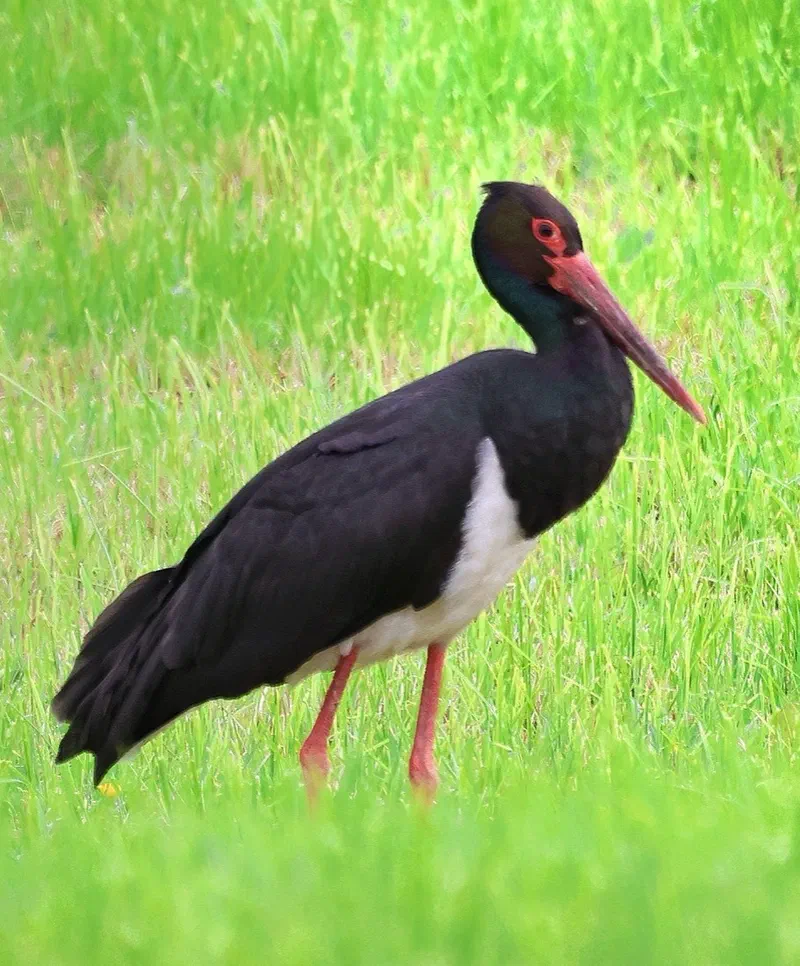
The Black stork at a glance
- Habitat: Large, undisturbed deciduous and mixed woodland with old-growth timber, plus near-natural forest streams, ponds and wet grassland as foraging habitat
- Food: Small fish, amphibians and aquatic insects from clear running and small water bodies
- Threat status: Currently not classified as threatened in Bavaria or nationwide, the population recovering after a historical decline, but highly sensitive to disturbance
- Protection status: Strictly protected under § 44 BNatSchG, Annex I of the EU Birds Directive
- Typical measure: Nest protection zones, securing of nest trees and old-growth timber, restoration of forest streams
Typical protective measures for the Black stork
Establishing nest protection zones
Permanent protection zones are designated around known and potential breeding sites. Within these zones, old-growth stands are kept free of use and disturbance, and additional quiet-period requirements apply during the sensitive breeding season from February to August. This maintains the ecological function of the breeding site (§ 44 (5) BNatSchG).
Securing nest trees and old-growth timber
Old, thick-branched broadleaf trees such as oaks and beeches are essential as nest-bearing trees. Through forgoing use, retaining islands of old and dead wood, and the long-term securing of suitable nest trees, the supply of breeding sites within the territory is maintained or specifically developed.
Developing foraging habitats and woodland streams
The black stork hunts small fish, amphibians and aquatic insects in clear, near-natural water bodies. Restoring woodland streams, creating and managing woodland ponds, and extensively managed wet grassland improve the food supply around the breeding sites.
Artificial nests as a nesting aid
Where suitable natural nest sites are lacking or have been lost, stable artificial nests in low-disturbance old-growth stands can provide an alternative supply of breeding sites. Site selection and construction are guided by the species' natural requirements.
Avoiding disturbance during the breeding season
The black stork is highly sensitive to disturbance at the nest. Visitor management, path concepts and timing forestry work outside the breeding season secure breeding success and complement the area-based measures.
The Black stork in these natural regions
All about the Black stork
Request protective measures for the Black stork
We plan and deliver the right CEF or FCS measure for the Black stork in your project.