Species protection for the Northern lapwing
Vanellus vanellus
The northern lapwing is a meadow-breeding bird whose breeding sites and resting places are protected under § 44 BNatSchG. Where a construction project affects its breeding grounds in arable fields or wet meadows, we plan and deliver the appropriate CEF measures so that the ecological function of the habitat is maintained.
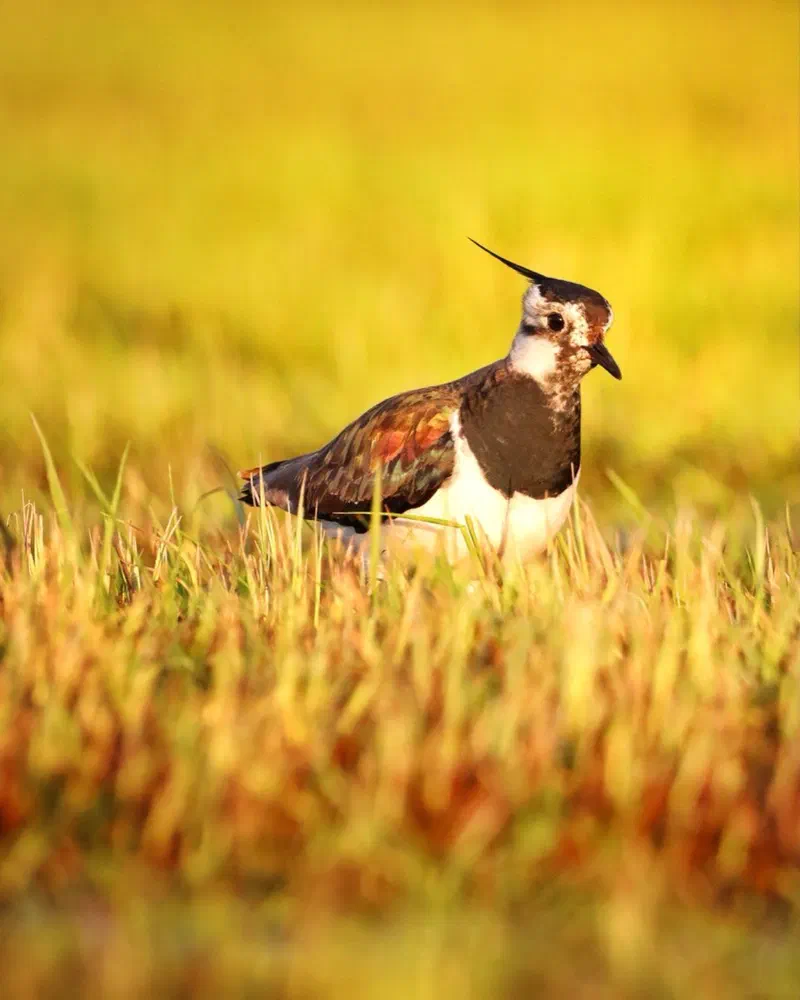
The Northern lapwing at a glance
- Habitat: Open, largely treeless landscapes, originally wet meadows, today mainly arable land and extensively used grassland with short vegetation and damp patches
- Threat status: Red List Germany and Bavaria: endangered (category 2), Bird of the Year 2024
- Protection status: Specially protected under § 44 BNatSchG as a European bird species
- Distribution in Bavaria: River lowlands of the Danube, Isar and Altmühl, and basin landscapes such as the Aischgrund, Donauried and Isar-Inn-Schotterplatten
- Typical measure: Scrapes and flood hollows, grassland extensification, nest protection (CEF)
Typical protective measures for the Northern lapwing
Creating shallow scrapes and flood hollows
Shallow depressions in meadows and fields that hold water only temporarily create short-grazed, damp breeding and foraging areas. These are among the preferred habitat structures for the northern lapwing and form the core of many CEF concepts.
Extensifying grassland
Converting intensively managed grassland or arable land into extensively managed, late-mown wet grassland with adjusted mowing dates and low fertiliser input creates permanently suitable breeding areas and secures the food supply.
Rewetting wet meadows
Raising the groundwater level and removing drainage systems creates open, damp meadow landscapes. This improves the food supply of soil-dwelling insects and stabilises breeding populations.
Clutch protection and nest site management
Marking and leaving out clutches, creating extensively managed lapwing islands, adjusted farming schedules and predator protection (such as electric fencing) secure breeding success on the measure areas.
Creating bare soil and open landscape
Removing woody vegetation and creating short-grazed, sparsely vegetated bare-soil areas meets the northern lapwing's need for wide visibility while also reducing perches for predators.
The Northern lapwing in these natural regions
All about the Northern lapwing
Request protective measures for the Northern lapwing
We plan and deliver the right CEF or FCS measure for the Northern lapwing in your project.