Species protection for the Skylark
Alauda arvensis
The skylark is a characteristic bird of open farmland and is one of the species regularly considered in the special species protection assessment (saP) for development projects. As a ground-nesting bird, it needs structurally diverse arable land with sparse vegetation and an open horizon. Where a project affects its breeding sites and resting places, advance compensation measures (CEF) safeguard the ecological function within the spatial context, supplemented where necessary by measures to maintain a favourable conservation status (FCS).
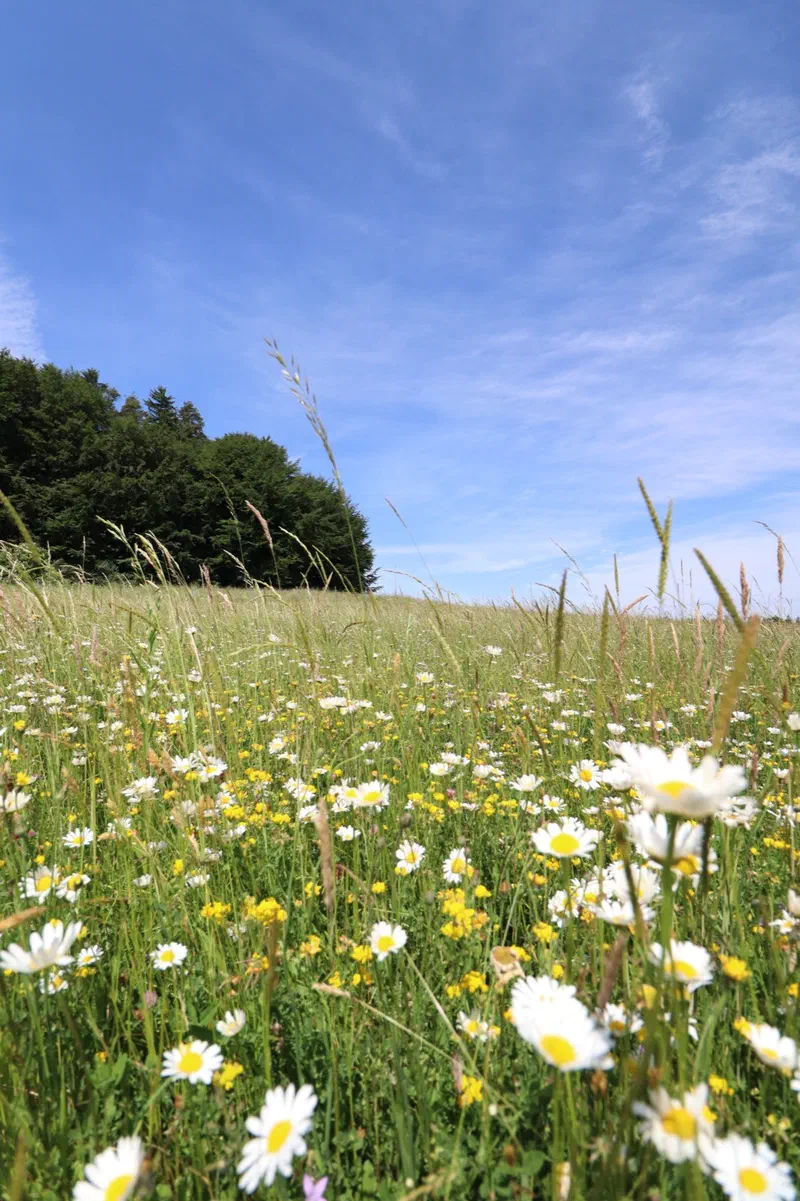
The Skylark at a glance
- Habitat: Open, largely treeless farmland with low, patchy vegetation. Fallow land, extensively managed grassland and spring-sown cereals are favourable at the start of the breeding season.
- Threat status / Red List: Category 3 (threatened) in both Bavaria and Germany, with a marked and continuing decline driven by the intensification of agriculture.
- Conservation status: Assessed as unfavourable to bad in the continental and alpine regions.
- Protection status: Specially protected European bird species under § 7 (2) No. 13 BNatSchG and the EU Birds Directive. The prohibitions of § 44 BNatSchG apply.
- Typical measure: Skylark plots combined with flowering and fallow strips, plus extensively farmed arable land, delivered as advance CEF measures.
Typical protective measures for the Skylark
Skylark plots with flowering and fallow strips
A short-term effective CEF measure in winter wheat. Around 10 skylark plots per breeding pair (each at least 20 m², 2 to 4 per hectare) plus 0.2 ha of flowering and fallow strips, distributed across an area of around 3 ha. The plots are created by leaving gaps during sowing, not by using herbicides, and lie at least 25 m from the field edge.
Flowering area and arable fallow
Sparsely sown flowering areas or flowering strips adjoining self-seeded fallow land, around 0.5 ha per breeding pair. No fertiliser, no plant protection products and no soil cultivation between 15 March and 1 July. Open bare-soil patches are retained as a nesting and foraging habitat.
Widened sowing row spacing
Cereal stands (spring cereals, winter wheat or triticale) with a sowing row spacing of at least 30 cm, around 1 ha per breeding pair. The wide row spacing creates the open structure that skylarks need for approach flight, nest-building and foraging. Winter barley is unsuitable because of its early harvest date.
Extensively managed grassland with cereal strips
A medium- to long-term effective measure on poor sites (soil value number up to 30): extensively managed grassland with the first cut not before 1 July, interwoven in a mosaic pattern with open cereal strips. Permanent retention is suitable as an FCS contribution to supporting the conservation status.
Site selection and spatial location
Effectiveness depends heavily on location. The areas lie open with a clear horizon, close to existing populations and set back from vertical structures (individual trees and hedgerows over 50 m away, tree rows over 120 m away, closed woodland over 160 m away) as well as at least 100 m from busy paths and roads.
The Skylark in these natural regions
All about the Skylark
Request protective measures for the Skylark
We plan and deliver the right CEF or FCS measure for the Skylark in your project.