Eco-points, compensation areas and species protection Nationwide from a single source.
We speed up your permit. With our own land portfolio, our own GIS department and over a decade of experience, we secure eco-points, deliver compensation and species protection measures, and carry out replacement afforestation.
Everything from a single source,
from land to permit
Full-service compensation management for parties with compensation obligations, infrastructure projects and landowners. Nationwide, since 2012.
Compensation areas
Buy and secure compensation areas nationwide from our own portfolio, with full coordination with the authorities and monitoring.
Buy compensation areas ›Eco-points
Buy eco-points, immediately available from officially recognised eco-accounts. All natural regions D01 to D73 covered.
Buy eco-points ›Species protection CEF and FCS
Advance CEF and FCS measures for skylark, sand lizard, bats and amphibians, planned and delivered.
CEF and FCS measures ›Replacement afforestation
Offsetting clearance, from permitting to new afforestation with site-appropriate tree species, nationwide.
Plan replacement afforestation ›Project management
Holistic management for energy and infrastructure projects. Complete compensation management from a single source.
Project management for infrastructure ›GIS and drones
Our own GIS department with 2D and 3D mapping, drone surveys and a real-time geoportal. Unique in the industry.
GIS and drone services ›Your starting point
Buy eco-points or compensation areas?
Compensation measures available immediately for your building permit.
Request advice ›Provide agricultural land
Stay the owner and benefit for the long term, with no effort of your own.
Offer land ›
Faster to your building permit
greeNature takes on the entire compensation land management, legally sound, efficient and from a single source.
- Eco-points immediately available from recognised eco-accounts
- Own land portfolio across all German natural regions
- Full coordination with the authorities included
- CEF and FCS species protection measures
- Replacement afforestation nationwide
We take the full load off you, from the land search through coordination with the authorities to long-term monitoring.
greeNature solutions, since 2012
Offer land and benefit sustainably
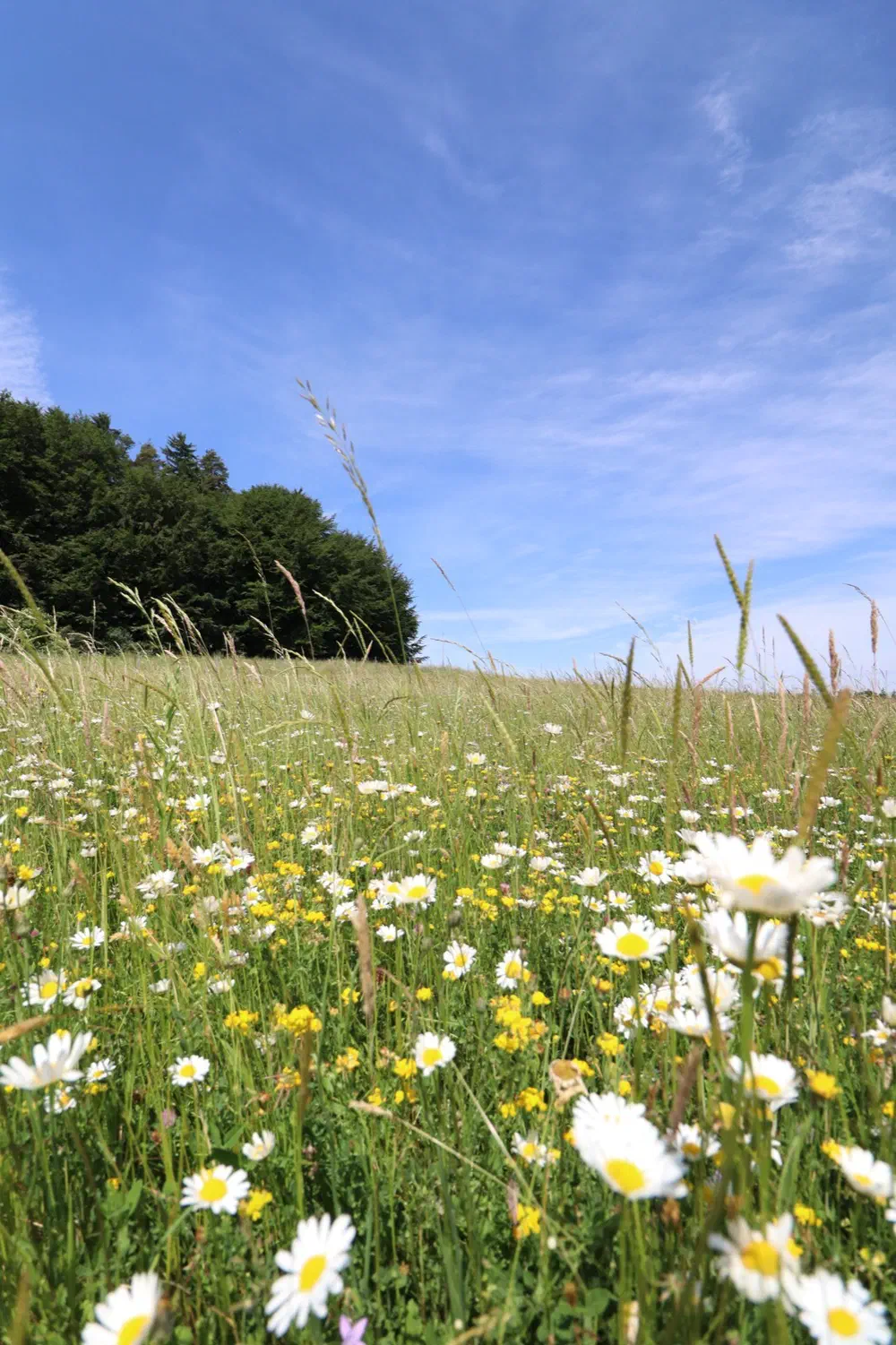
Turn your land into ecologically valuable compensation areas, without giving up ownership.
- Ownership rights retained
- Attractive usage payment
- Continued management possible
- No cost to you
- An active contribution to nature conservation and biodiversity
What no competitor can match
Our own portfolio, our own GIS department, our own nature conservation specialists. No marketplace, no broker.
Own portfolio
Over 10,000 ha of our own land across Germany. Genuine availability instead of brokerage.
Own GIS department
Precise land analysis, drone surveying and a real-time geoportal built on ESRI.
Full-service since 2012
From the land through to monitoring, all from one source under BayKompV and BKompV.
Immediately available
Eco-points held in stock from completed pools, for compensation without waiting.
Your path to compensation
Contact and analysis
Analyse the requirement, identify the natural region, assess the potential.
Planning
Planning of measures, allocation of land and coordination with the authorities.
Implementation
Professional delivery of all compensation measures.
Monitoring
Long-term performance review and complete documentation.
Figures that speak for themselves
Eco-points across the whole of Germany
Choose your federal state to find the natural regions, districts and matching eco-points. greeNature is active nationwide across all 16 federal states.
Compensation in Germany, explained clearly
Meeting your compensation obligation without delaying the project
Under sections 13 to 15 of the Federal Nature Conservation Act (Bundesnaturschutzgesetz), every significant impact on nature and landscape triggers a compensation obligation. This affects residential and commercial construction, transport routes, power line corridors, substations, pipelines, wind energy and ground-mounted photovoltaic installations, extraction projects and forest clearance. The law requires a clear sequence: avoid impacts, offset or replace unavoidable impacts, and only then consider a compensation payment.
In practice, this obligation rarely fails on technical grounds but on land. Suitable plots in the right natural region are scarce, owners have to be found and persuaded, and the measure has to be permanently secured, implemented, managed and documented for decades. This is exactly where greeNature comes in: we bring the land, not just the planning.
greeNature solutions has worked since 2012 as a full-service provider for compensation land management. We hold our own land portfolio of more than 10,000 hectares, operate officially recognised eco-accounts, run our own GIS and drone survey department, and are active in all 16 federal states. Our clients include DB InfraGO, TenneT TSO, Amprion, Open Grid Europe, OMV Deutschland and the Fraunhofer-Gesellschaft.
Eco-points: compensation that is already in place
Eco-points are the settlement unit of the statutory impact mitigation regulation. They arise when an area is ecologically upgraded ahead of a specific impact and the upgrade is credited by the responsible nature conservation authority to an eco-account under § 16 BNatSchG. Typical upgrading measures include the restoration of watercourses and floodplains, the development of species-rich extensively managed grassland, the creation of hedgerows, field copses and traditional orchards, the rewetting of drained sites, and new afforestation and near-natural forest conversion.
The practical advantage for project developers is time saved. Anyone acquiring eco-points from a completed pool does not need to search for their own land, pre-finance a measure or wait for a development period. The compensation is already physically in place and has been assessed and recognised by the authority. This allows the compensation evidence to be provided earlier and more robustly in the permitting procedure.
Assessment follows different sets of rules depending on the federal state and the responsible authority. In Bavaria, the Bavarian Compensation Ordinance (BayKompV) applies; for projects under federal jurisdiction, the Federal Compensation Ordinance (BKompV) applies; alongside these, state-level eco-account and compensation ordinances exist. greeNature calculates under both systems and allocates eco-points to match the natural region, from D01 in the north German coastal area to D73 in the Alps.
Compensation areas from our own holdings rather than the market
Not every compensation requirement can be met through eco-points. Some permits require a spatial and functional link to the site of the impact, others call for specific habitat types or a measure tailored to the impact. In that case, a specific area is needed.
Because greeNature holds land itself and continually acquires new land, we are not a broker between supply and demand but an owner and operator. That shortens coordination and makes our commitments dependable. We take care of allocating the measure to the impact, securing it in rem or by contract, coordinating with the lower nature conservation authority (Untere Naturschutzbehörde), implementing the measure, registering it in the compensation register and the subsequent management.
For landowners, this is the other side of the same coin. Anyone who owns agricultural land with low productivity, for example erosion-prone slopes, waterlogged hollows, narrow residual parcels or structurally poor arable land, can make it available as a compensation area without giving up ownership. Implementation, management and monitoring remain with us.
Species protection: CEF and FCS measures
Alongside the impact mitigation regulation, special species protection applies. Under § 44 BNatSchG, it is prohibited to kill animals of specially protected species, to significantly disturb them, or to destroy their breeding sites and resting places. If a species loses habitat as a result of a project, its ecological function must be preserved in the surrounding area. This is achieved through advance compensation measures, known as CEF measures under § 44(5) BNatSchG. Timing is decisive: the measure must be effective before the impact takes place.
Where a prohibition cannot be avoided, an exemption under § 45(7) BNatSchG may be considered. Among other things, it requires that the conservation status of the populations does not deteriorate. Measures that ensure this are called FCS measures.
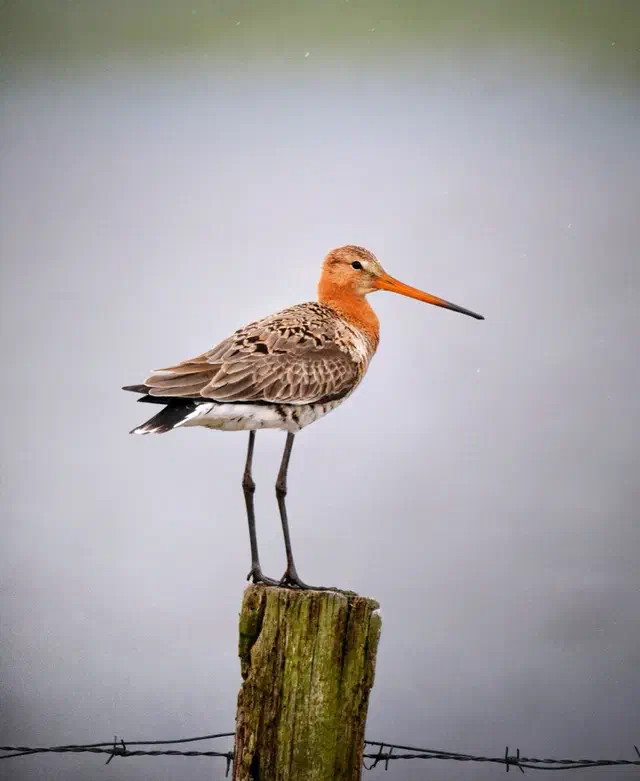
greeNature plans and implements both, among others for skylark, northern lapwing, black-tailed godwit, grey partridge, sand lizard, smooth snake, hazel dormouse, European wildcat, bat species and amphibians, as well as for large birds and birds of prey such as black stork, red kite and hoopoe. This includes skylark plots and flower strips, habitat structures made of deadwood and stone piles, replacement roosts and winter roosts, amphibian guidance systems, spawning waters and relocations with expert supervision.
Replacement afforestation and forestry law
Forest clearance triggers a separate obligation. Anyone converting forest to another type of use must generally establish new forest of equal area or a proportional area under the relevant state forestry law (Landeswaldgesetz). Requirements differ considerably between states, both in the conversion factor and in the permitted tree species, as well as in whether the replacement area must lie in the same growth region.
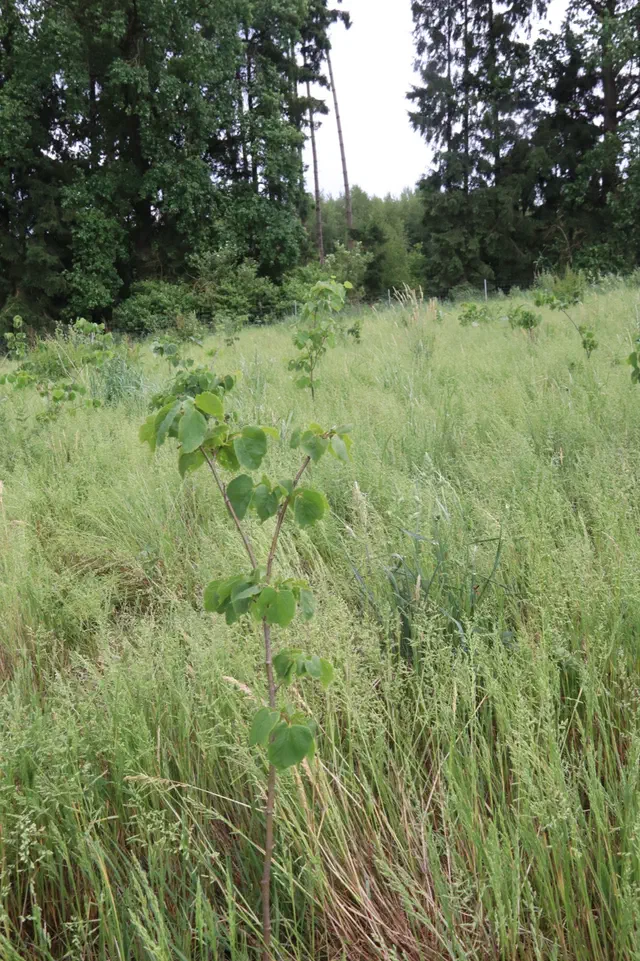
greeNature takes care of finding suitable afforestation sites, coordinating with the forestry authority, planting with site-appropriate and climate-resilient tree species, and tending the young stand and protecting it from browsing damage until it is established.
GIS, drones and monitoring
Compensation does not end with implementation. Measures have to be managed, checked and evidenced to the authority over decades. greeNature runs its own ESRI-based GIS department for this, with drone surveys, 2D and 3D mapping and a geoportal through which clients can view the condition of their sites.
The same infrastructure gives rise to services that are also in demand independently of compensation: surveys of routes and installations, vegetation analyses, volume calculations, orthophotos and terrain models, as well as the maintenance and quality assurance of geodata.
Regionally rooted, available nationwide
Compensation is state law applied across the whole country. Every federal state has its own assessment procedures, its own eco-account rules and its own administrative practice, and every lower nature conservation authority interprets them with its own priorities. That is why we map the regions consistently: by federal state, by major natural region D01 to D73, and by district. For every area, you will find the relevant legal basis, the typical habitat and species groups, and the appropriate compensation approaches.
With locations in Bavaria, Rhineland-Palatinate and Lower Saxony, we are present in southern, central and northern Germany with our own local contacts. Working together begins with a conversation about your specific requirement, the location of the impact and the timetable in the permitting procedure.
Everything about eco-points and compensation areas
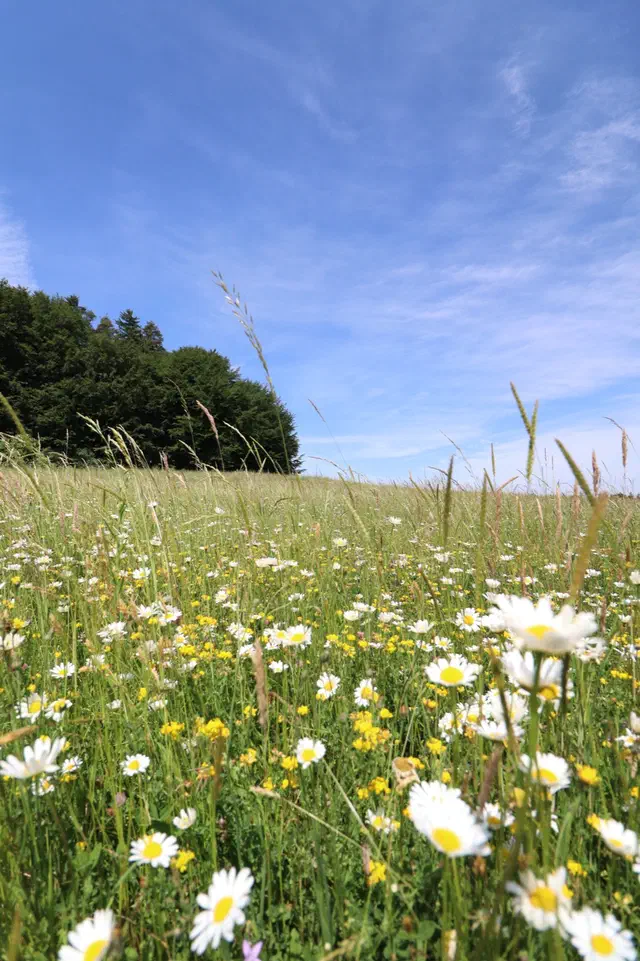
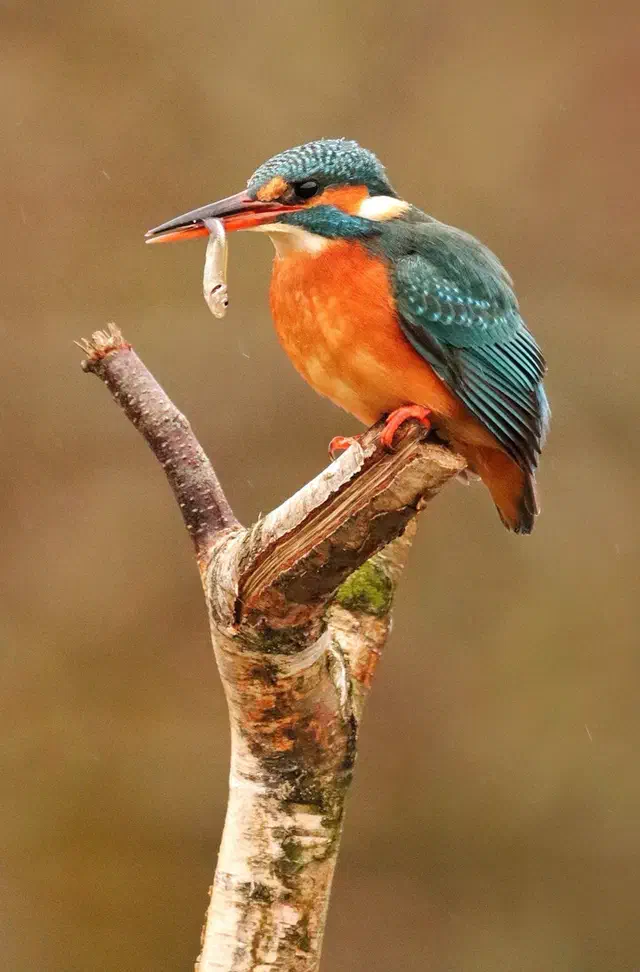
Compensation you can see
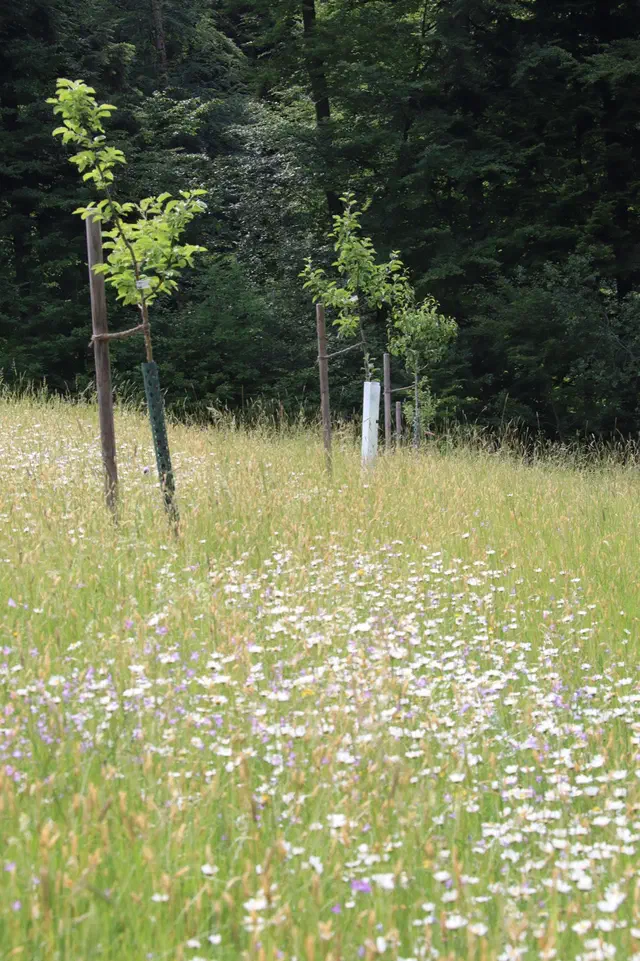
Photographs of completed measure sites. What begins in the permitting procedure as a balance in value points ends as a habitat.



Ready for your
compensation solution?
Whether eco-points, compensation areas, species protection or replacement afforestation, we find the right solution.